https://www.youtube.com/watch?v=oDu2rUoT2NM Zelinka, Peter. Mysterious Pictographs of the Southwest. YouTube.com, 2021. Web. The Human Imagination is priceless. It has great potentials for creativity. And even at this early stage in history, it could get very surreal. How ever much this is true, there's still common archetypes in these cave drawings. Giants. Bug creatures. Pinocchios---just humans with elongated noses. The murals were made around 1300AD, from what I understand. Which, at that time, the religions of the Americas had a lot of strange looking figures in it. You can see the Aztec gods and goddesses are very strange. These are no different. However, they might mean something different, which I'll get into. Very interesting stuff. Human imaginations at work... So, draw from the imagery common themes in human imagination. The sideways mouth of the giant 3:56 is something I myself have imagined. It's just something that turns up independently in my daily musings. I don't know why. But, there's also a common mythology of a World Tree in both Mayan and Norse cultures, which could have no contact with each other whatsoever. Why do they both have a world tree? I don't know. But, I think certain patterns of subconscious bring those ideas out, because only so much is possible for us to imagine. As great as this is, there's certain limitations on what we can draw, or represent with images. My favorite image is the negative space where there's a woman 6:04 underneath the armpit of the owl creature. She even gets formed into a body. This is some Grade A art. Definitely among the best I've seen, even for today's standards. Some other universal images are the Broad Shoulders of the Chiefs. 8:30. When we think of authority, we think of broad shoulders. You have to understand, also, that some of these images utilize negative space to complete the images. I'm looking at one right now, where I can see it's a man and woman, just by the negative space and what's not there. I can see the hair of the woman becoming more defined in the negative space of the image. I can even see faces cleft out of the rock, defined by some of the lines of the paintings (whether by natural erosion, or intentional, I don't know). Very beautiful. A testament to the human Imagination, and the Logos at work. It's just the possibilities. As much as is here, I don't really see anything new. You know what I mean? There's just a lot of common archetype and symbology and even though some of it is disturbing---the Shadow in all of us is disturbing---what is depicted here is a battle between the light and the dark. Twisted and enigmatic figures are overcome by nature. I think that's the meaning of this, too. It's a fight between subconscious fears and the peace and harmony of the natural and real world. In all estimations, it's a lot like my mythology of Fairyland. A battle between subconscious demons in all their grossness, (Judge not lest you be judged; and remove the log in your own eye before you see to remove the mote from another) and the real, natural and beautiful world.
Author: B. K. Neifert
Mark 13:51Jesus saith unto them, Have ye understood all these things? They say unto him, Yea, Lord. 52Then said he unto them, Therefore every scribe which is instructed unto the kingdom of heaven is like unto a man that is an householder, which bringeth forth out of his treasure things new and old.
Poetry Club
I join Poetry Club--- Not really, but let's pretend--- I walk in, and there's pretentious Jackass Who all the group fawns over. His art is mediocre, but they all insist he is god's gift to letters. I show my writing, And immediately they pounce all over it. They criticize everything it's done right--- Like the pretentious brown nosers they are-- And like the game I played today, Of posting in a category--- There is the true artist, Me, Lonely, and blowing in the wind. I'm late to the game. I'm early for the game. I do not time my art Except for the larger picture. I do not craft my art to be timely. Rather, I do my art from the sheer joy of doing it. Some generation will recognize it, But hopefully it is my own So I am not one of those unhappy artists who Never benefited from the Providential Gift of utterance. As Solomon says, "There is such a man who labors for wisdom, "But lo, it goes to another. Vanity, vanity, all is vanity, "That which man labors for under the sun."
The Classical Head
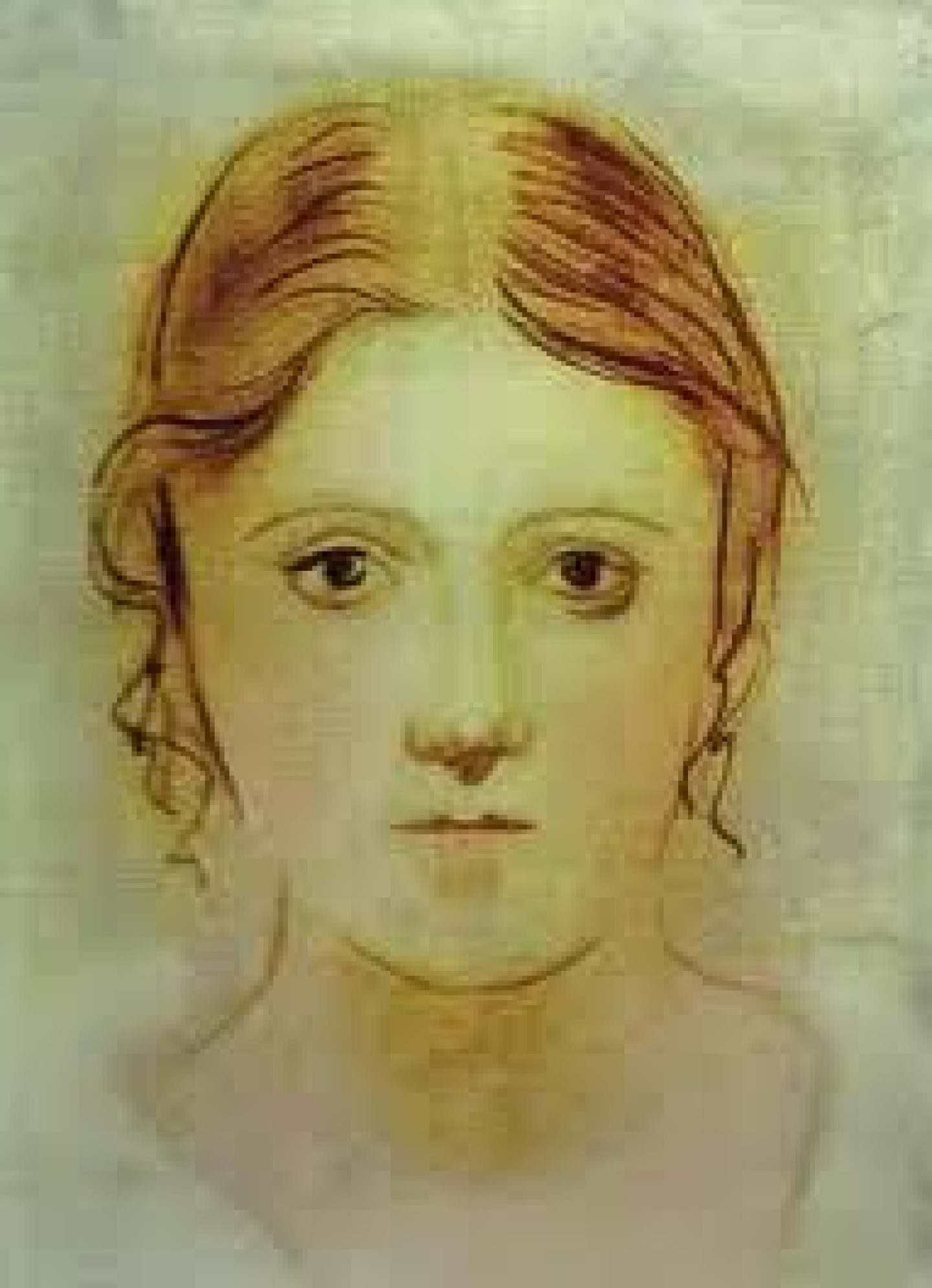
I'm not much for Picasso--- Yet, my favorite portrait is by Picasso. It is a woman's head--- The classical head--- Of Olga's, with her Auburn locks And sumptuous face. Round, strong jawed, But thin jawed, Almost ovular And not circular... A strand of hair frames her In the way of an attractive woman With her justified sprezzatura. Messy, unkept, with a content crease on her lips. Her eyes are dovey, And her whole face is drawn With, I think it is, a couple of threads of pencil. The artist could, in fact, Draw a beautiful shape--- The portrait of feminine beauty--- In only three or four masterstrokes of his brush. How I do hate making poetry like this--- Though, in spirit of Picasso, I shall make it like this. I am more of a Raphael--- But like Picasso did, I can show my proficiency in the era's conventions.
New Philosophy
You are Analytic and Continental. You read my poem, and say, "The analytic in me thinks it's good. "The continental thinks it's 'meh'." You ask me to tell you my inspiration, Well, it is precisely that both Continental and Analytic philosophies Are sophistic. And a good epistemology Is rooted in aligning Phenomenon to Noumenon; Thereby, I propose a different philosophical school. It is called "New Philosophy" Though it is indeed the old philosophy. For, we were closer to the truth during Plato Than we were during Hurrels. And we were closer to the truth during Aristotle Than we were during Wittgenstein.
The Stock Market Fall
1929 Coolidge, in his booming economy, Does nothing, as Margin Trading Becomes available to the public. 2008 Reagan, in his booming economy, Does nothing, as Private Equity Buys the worker out of their wage.
NP Difficulty
I have been watching proofs--- Oh, their poetry is so serene--- And I realize NP difficulty Is much like a Geometric Proof. Rather, to solve them, requires Not one master equation But solving the difficult variable By combining other basic theorems To further build upon to a right and new solution.
Sophism and Epistemology
How the sophists play at golden Ends of civilizations. For The prosperities of those men Who were their elite forbearers Did build with Reason's Sun and Rain. The joyful sun, a Priori... Sad rains, a Posteriori. Which, the civilization springs Like the grass, when both are balanced. Yet, from both Science or Phenom Does the sophist never know, faced With unknowns, void by faith's phantom. Aught, Science and Phenomena Cause sweet wisdom's diaspora. History's witness And being's ontology And Cause's Effect Are the measures of all good Philosophy: listen; look. It is not always about ends and means, but, sometimes, that things are what they are.
Fibonacci
Symmetry--- You Fibonacci numbers appear in nature Because of your symmetry. You appear because of the soundness of your structure. Phi---you are Nature's Rectangle; You are Nature's Symmetry--- You are Nature's sounding board For the entire structure of the universe.
The Passion Translation
I've been thinking about this over dinner. I just don't think the TPT translation cuts it. Scripture should put the Fear of God in me. It shouldn't be warm and cozy. It should be frightful. Like, I should be trembling, but instead I feel... well... it's hard to say. I definitely feel God's peace in the diction, but scripture is the Law. It's God's wrath being told to someone, in order to cause them to repent. When I read scripture, if Jesus' words, or Paul's, or John's, or Jeremiah's, or Moses', I always should have a question mark. I shouldn't be affirmed, as that's not what God wants. He wants us to fear Him, and His name, and choose righteousness. I should never feel vindicated by scripture. I should always feel a question mark, about my own righteousness. So... Generally, I disapprove of this Bible Translation. While, I know the Author had peace writing it. I would never question that. And there's a lot of peace---I think scripture's whole purpose is different than communicating God's peace. I think it should rather, stir up Fear, and Loathing for our own sin. It shouldn't be like a Warm Blanket, but it should rather be like a wooden rod. Moreover, the Word of God should be active. And the language in the Passion Translation is too passive. A good translation, affirms that Jesus Christ is Come in the Flesh. This translation's interpretation of John 4:2 is not only more passive than other translations, it's triply passive. The point being, is that Jesus is the Flesh Embodiment of the Word of God. And an accurate translation, will in these verses, make that explicitly clear. Not obscure it, or put it into the past tense. That's always my way of knowing a good Bible Translation, is how they deal with that verse. Shh... don't tell anyone. But, it does prove the diction and how the reader views the relation to scripture. "is" is in present tense. "has" is in past tense. Our savior is in the present. Not the past. And the Passion translation says, "as the Christ who has come in the flesh", which, as a poet, highlights the fault with this entire translation, is just how passive it is. You have three instances of Passive language. "Who" "Has" and "As" all work together to sort of bring about a passivity of thought, which is inevitable, because the entire translation is riddled with these passivities. Scripture is so good---because even in King James English---it's always active. It's lucid. Scripture, when translated properly, should be among the most lucid writing there is. Because Biblical Poetry translates into active and lucid thoughts. You can compare The Passion Translation to something like the Avesta or cult writings, where there begins to be a muddling of lucidity. There begins to be added words, circumlocutions, and muddy thoughts. Compare, for instance, King James English with Shakespeare's, also. Notice how the KJV, being contemporary, is still far more lucid than even Shakespeare. That's because it faithfully translated the Bible. Bibles should be lucid, crisp, and without circumlocution. Which, I can only say from a Poet's standpoint, The Passion Translation has a warm and fuzzy feel, but it's not the Word of God. It's added too many extraneous thoughts into the text, that don't belong there. "The forward violet thus did I chide: Sweet thief, whence didst thou steal thy sweet that smells, If not from my love's breath? The purple pride Which on thy soft cheek for complexion dwells In my love's veins thou hast too grossly dy'd. The lily I condemned for thy hand, And buds of marjoram had stol'n thy hair; The roses fearfully on thorns did stand, One blushing shame, another white despair; A third, nor red nor white, had stol'n of both, And to his robbery had annexed thy breath; But, for his theft, in pride of all his growth A vengeful canker eat him up to death. More flowers I noted, yet I none could see, But sweet, or colour it had stol'n from thee." Shakespeare Sonnet 99 "Why do the heathen rage, and the people imagine a vain thing? The kings of the earth set themselves, and the rulers take counsel together, against the Lord, and against his anointed, saying, Let us break their bands asunder, and cast away their cords from us. He that sitteth in the heavens shall laugh: the Lord shall have them in derision. Then shall he speak unto them in his wrath, and vex them in his sore displeasure. Yet have I set my king upon my holy hill of Zion. I will declare the decree: the Lord hath said unto me, Thou art my Son; this day have I begotten thee. Ask of me, and I shall give thee the heathen for thine inheritance, and the uttermost parts of the earth for thy possession. Thou shalt break them with a rod of iron; thou shalt dash them in pieces like a potter's vessel. Be wise now therefore, O ye kings: be instructed, ye judges of the earth. Serve the Lord with fear, and rejoice with trembling. Kiss the Son, lest he be angry, and ye perish from the way, when his wrath is kindled but a little. Blessed are all they that put their trust in him." Psalm 2, King James Bible Though, I must confess it is Brian's freedom to make it. However, for those who are truly devoted to Scripture, and studying it, I'd recommend a KJV or GNT if for Modern English. Also, he sounds like he's rewriting some of Jesus' parables and sayings. Jesus used crisp and almost superhuman language. He didn't talk like us. He talked in declarative, and accusative sentences. He never spoke passively. Compare Luke 15 in the TPT, the GNT and the KJV. TPT: -5“There once was a shepherd with a hundred lambs, but one of his lambs wandered away and was lost. So the shepherd left the ninety-nine lambs out in the open field and searched in the wilderness for that one lost lamb. He didn’t stop until he finally found it. With exuberant joy, he raised it up, placed it on his shoulders, 6Returning home, he called all his friends and neighbors together and said, ‘Let’s have a party! Come and celebrate with me the return of my lost lamb. It wandered away, but I found it and brought it home.’ ”7Jesus continued, “In the same way, there will be a glorious celebration in heaven over the rescue of one lost sinner who repents, comes back home, and returns to the fold—more so than for all the righteous people who never strayed away.” GNT: 4 “Suppose one of you has a hundred sheep and loses one of them—what do you do? You leave the other ninety-nine sheep in the pasture and go looking for the one that got lost until you find it. t. 5 When you find it, you are so happy that you put it on your shoulders 6 and carry it back home. Then you call your friends and neighbors together and say to them, ‘I am so happy I found my lost sheep. Let us celebrate!’ 7 In the same way, I tell you, there will be more joy in heaven over one sinner who repents than over ninety-nine respectable people who do not need to repent." KJV: 4 "What man of you, having an hundred sheep, if he lose one of them, doth not leave the ninety and nine in the wilderness, and go after that which is lost, until he find it? 5 And when he hath found it, he layeth it on his shoulders, rejoicing. 6 And when he cometh home, he calleth together his friends and neighbours, saying unto them, Rejoice with me; for I have found my sheep which was lost. 7 I say unto you, that likewise joy shall be in heaven over one sinner that repenteth, more than over ninety and nine just persons, which need no repentance." I mean, obviously, the GNT is exactly how I remember Christ speaking, from how I was taught in Sunday School. Christ didn't speak like us. He spoke with supernatural clarity, all the time. And I think the GNT surpasses the TPT. As, if a person wants a modern English translation, it will be much wiser to buy a GNT, as it echoes the actual cadence of Christ in modern English. Also, putting them all together, do you see how the TPT has about two extra lines of text? There's many criticisms to have of this translation, but these are just a few. Make no mistake, the TPT is written well, but it's not written right. The Bible shouldn't cadence like my writing, or anyone else's. An author's voice should never intrude into the text with Cantor. It should---as is true with all good translators---imbibe the original author's cadence and feel, only in the translator's tongue. An author should never intrude into their translations. Which, as an auxiliary note, is why I prefer Brian Stone's translation of Sir Gawain and the Green Knight over Tolkien's, is also for that reason. Sincerely, B. K. Neifert
The Art of Fascism
Why was the height of art Made so low? In frantic screams of ethnic purity The true artist was made a fool---, Though, I take my middle brow poetry And I do it well. Perhaps it's best that the high brow art Is decadent, and ugly, and foul--- Why? So it puts into perspective That art cannot save a nation. Ovid, Homer, Christ, Seamunder, Snori, Virgil, Grimm's Fairytales, Friedrich Nietzsche, Wagner, all were fodder to stir up the Volk. I do understand this. But I am not this.