
Hi, Elon and D.O.G.E.. What I accomplished last week was this:

1. I found a little over half a dozen pieces of evidence for the Gospels, as witness, and explained them in a podcast.
2. I wrote a poem on February's Fay---a term I'm trying to enter into the vocabulary---of the red budded maples in February, and the yellow yawns on the Willow's Branches.
3. I updated a list of contemporary Christian YouTubers who are beneficial to the faith (A continuous project).
4. I worked through Welsh and Irish mythology, reflecting on its wisdom literature---finding even more agreement on Morality, and also the backslide īnto sin, across all cultures throughout the world, in space and time.
5. I expounded upon the meaning of mathematics---wondering on the implications of a man's research who was trying to find a "Grand Unified Theory of Mathematics", essentially the Geometric Principle connection to applied Mathematics, that we operate off the assumption of, that now we are even one step closer to proving. (There's a similar proof of 1 + 1 = 2 that is 300 Pages; I was enlightening some people that we already know this about math, but are working toward the proof for it, as all mathematical principles work off of that assumption, primarily.)

P.S.

I'm not infuriated. Just astonished at the work I actually was doing. Any honest person should be capable of doing this, if they are doing their work. It should be a huge confidence booster, not a source of shame. It took about 20 minutes of looking through my search history and body of work to find and remember.
Category: Uncategorized
The Cry of Moses
Oh, walking through the forests,
I had seen Zion, a comely maid,
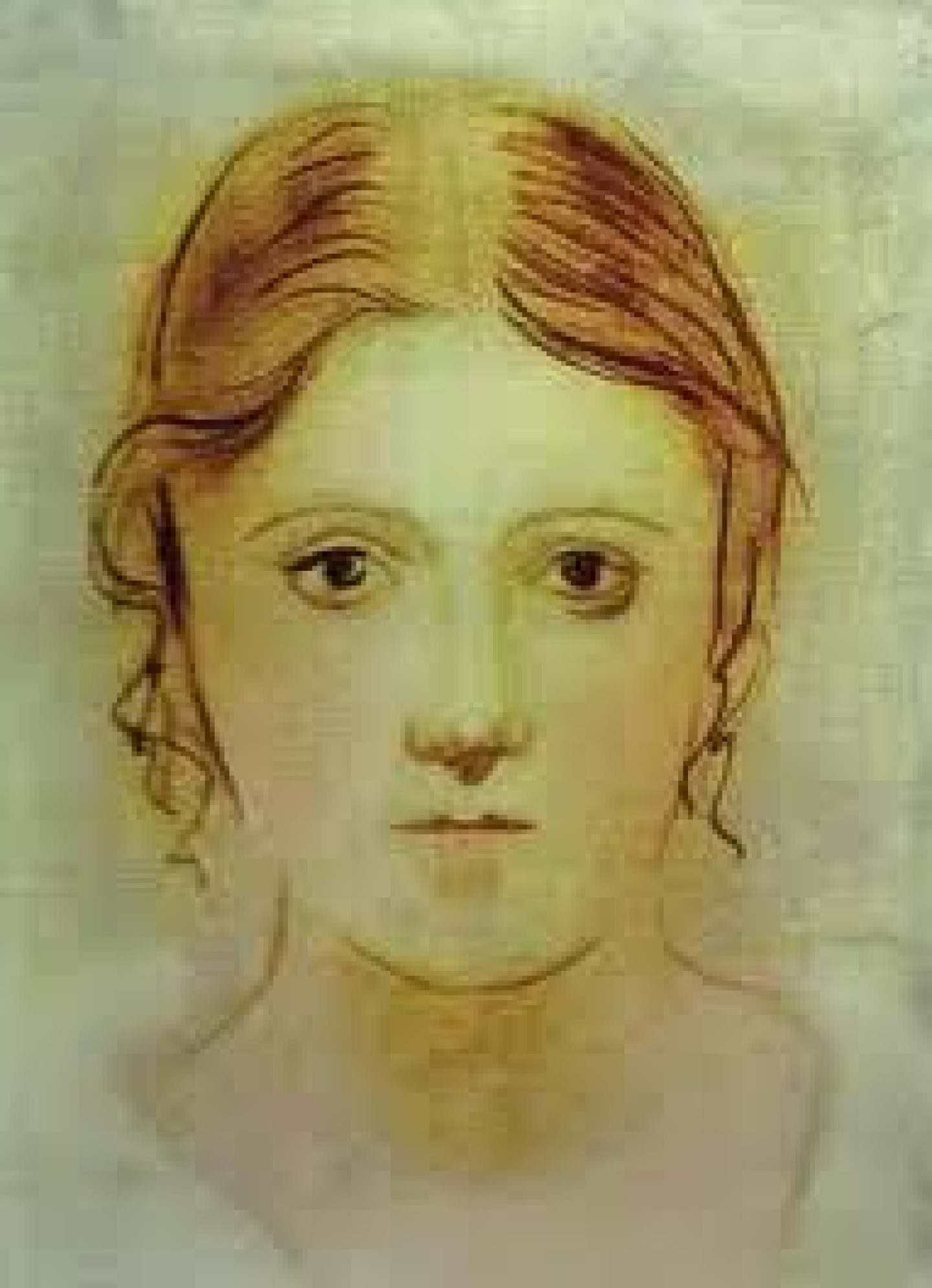
Appear, with her auburn hair
And face radiant as the sun.
"I had seen the towers of Zion
"Their golden Plateau, and I had
"Seen the many trees of life.
"I had seen my beloved animals there
"And I had seen the fish burst
"Ezekiel's River, and the mounts
"Made smooth through Zion's height.
"I had seen the land was good
"And like Joshua and Caleb
"Wished to enter it, but the LORD
"Said unto me, 'Gaze upon this hill
"'For you shall not enter into it."
And reading Numbers, I understood
For the people's sin, they did not believe
The report about the beauty of Zion
So they refused to enter, but sought
Sinai as their refuge and not Jerusalem.
"So I wept, not having Zion as my earthly bride
"But was given radiant exposure to the Son
"That I should enter into this peace
"When my time was up,
"For I was not fearful of the Anakim
"When God had showed them to me."
The Progression of Civilizations
Small wooden boat, free
And naked, sailing to find
Meat, and to twine nets.

Then, cloth, linen or
Wool, and steely implements.
With beast-logistics.

Then, there is the coal
Of fire, and industry
And happy markets.

Then mechanical
Might replaces their strong beasts;
Manpower, machines.

Then computers link
Them to the whole wide world
So they grow angry.
The Shepherd and the Mogul
There was a Shepherd who seemed idle, tending his flocks, and brushing their hair, and feeding his sheep. He clipped their toes, and pet them, and would spend hours on the hill doing nothing, but watching his sheep. The Mogul came by and said, "Why are you so idle? There's no profit to this." The Shepherd replied, "I am not idle; I'm merely observing my sheep for any illness, or any injury, or whether they are hungry or calving young; or if there are any disputes between them so I can separate them, or any mischievous habits that could prove fatal. For, if I am not attentive to what they are doing, they shall get sickly and die, and be of no use to me."
Why Does the Fisherman Mend Their Nets During the Storm?
Well, someone’s got to fish, right? So we have fish on plates. And those fishermen need nets, and they need tackle, and they need boats. So, when it’s stormy out, they can’t fish, but their nets, if in disrepair, won’t catch the fish even if it’s sunny. So, instead of being idle, and letting their property go into disrepair, they spend the time mending their nets, and boats, and being prepared for when they can go fishing. As time is the most crucial part of economics, and how you use it is the catalyst to success or failure.
Bezaleel
You were skilled in craft, and very wise...
Oh Bezaleel---a craftsman given your plans
From the designs of the Almighty.
Wise, are those given their craft
For the plans and forms come from God.
So do my stories, though not Prophecy,
Are themselves my Ark, and Tabernacle;
Sermons, designed for true worship.
The Sorcerer and the Sheep
The sheep had dreamt every night, and counted his brethren jumping over the moon. But, he grew bored of this, so prayed to Jehovah for more exciting dreams. Thus, in that moment, a sorcerer showed up, and said, "I can give you more exciting dreams." To which, the sheep assented, but within a second guess, said to LORD Jehovah, "I do not want this sorcerer's dreams. I want, rather, for you to give me my dreams. For, if they come from a sorcerer, they shall do me great harm." Yet, the sorcerer cast a spell upon the sheep even so, and the sheep suffered under his dreams. At last, the sheep said, "LORD, Jehovah, make these dreams go away." To which the LORD did, when the Sheep asked for forgiveness, and admitted he ought never have approached a sorcerer in anything or anywise.
I Stand With Israel
Fight, fight, fight...
Destroy your enemies in the night!
The Shepherd Boy, the Lion, the Fox and the Wolf
The Shepherd boy was walking down the country road, when he encountered a Fox in his den. And the Fox came out, yet the Wolf--the Fox's master--came out too; yet embittered by the Shepherd being present, who witnessed they were prowling very late at night; the Wolf started hurling abuses at him. The Shepherd called for help, so the Game Warden beat the Wolf severely. Yet, the Shepherd had been sorry for calling the Warden, and repented, saying, "I had put in a false report."

The Lion also, was on the prowl, and ate the Shepherd's Black Sheep. Yet, the Shepherd had not witnessed it, save in a dream at night---for it was the night season, and he ought have to slept at some time---and when he awoke, the Black Sheep was all bones and meat, but the Lion's jowls were red. The Shepherd put in a report to the Game Warden, but then thought, "I am wrong, for I do not know if this is my sheep which the Lion had eaten." Thus, he had told the Warden, "I had put in a false report."

Yet, many Sheep were disappearing throughout the kingdom... yet the Shepherd was not wise, or was he? He could not tell, for he did not wish to put in a false report.
Mary Had a Little Lamb Analysis
While, it's not explicitly about Jesus, but certainly, Jesus probably inspired it. I don't think it's really about Jesus, though. It's kind of a bad literary criticism to intuit messages into a poem that aren't there, but I'd say the poem likely was inspired by Jesus. That's definitely a wholesome thought.

But don't be esoteric. One has to tone down esoteric readings, because then you probably do the same thing with the Bible. Surely, when Jesus was a child, He followed Mary around, and probably stuck by her. As it says "And everything the child did, brought joy to Mary's heart." But, you can't get too deep into it. When you do, and seek hidden symbols or messages, that's esotericism, and not generally something one wants to do in any form of interpretation.

Certainly though, that tension of the Biblical Imagery is there, as it was written in a time when Biblical Motifs were often alluded to. But, it's an allusion, because the lamb is literally a lamb. But, then it could be referring to Jesus in the sense that He's like the lamb, being so innocent. That we love Jesus, like Mary loves her lamb, yet the lamb was a sacrificial animal.

It's interesting, because I was thinking about this a while ago, too, as I was driving. This exact thought, the beautiful motifs of Jesus being Mary's lamb hit me, and elevated the poem. But, when one does analysis on anything, don't put meaning into it that doesn't follow. It'll thoroughly elevate one's reading experience.

I mean, we kind of carry our little lamb around, too, and it shocks people at our schools and our work and everywhere we go. But that's drawing an interpolation from the poem, which you're allowed to do. But that's personal, and not really what the poem means.

