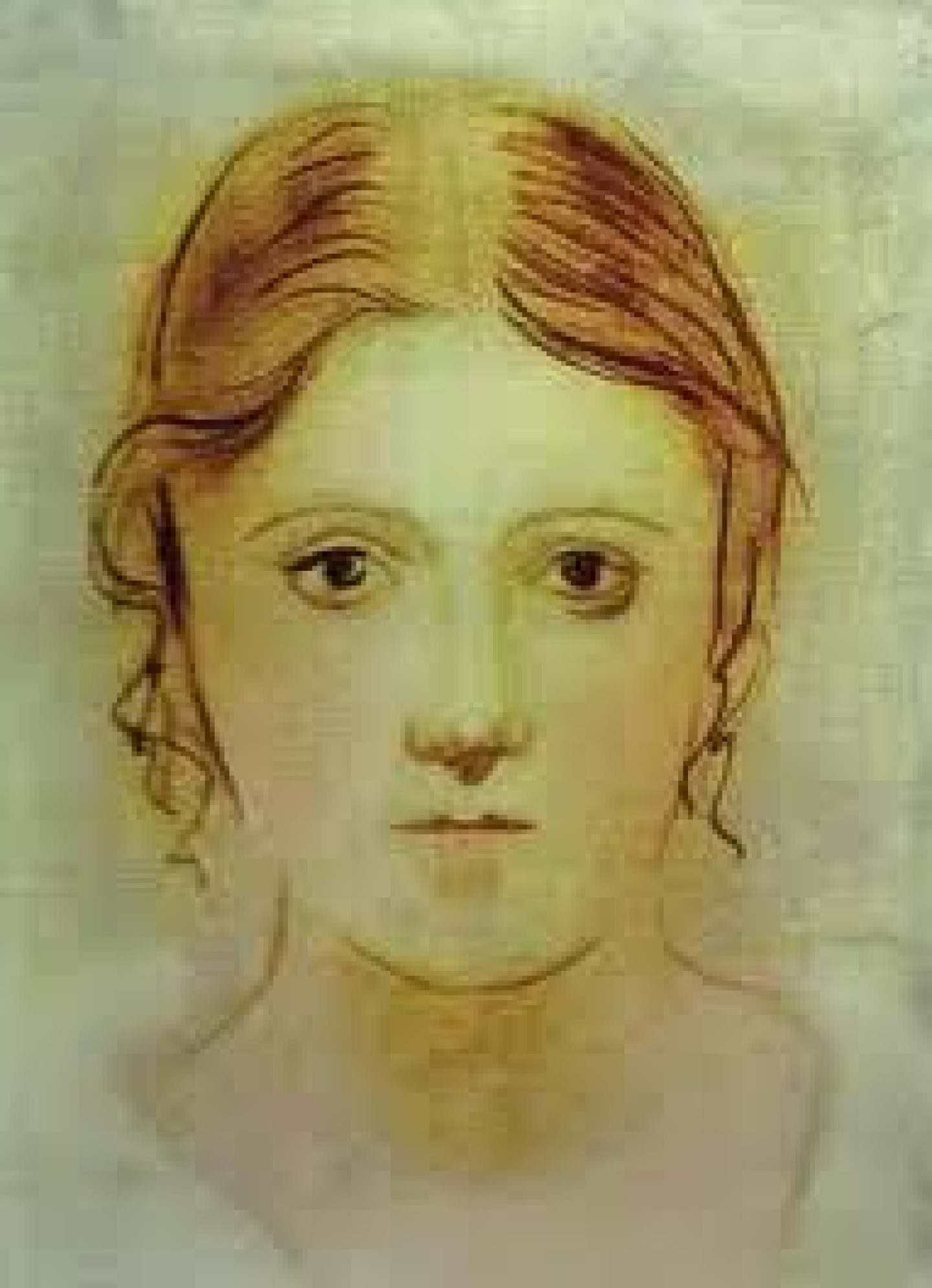

The fault in my thought
Falls into froms and minuses.
All things, can I understand...
Save the most basic things
Such as distributive properties
Which creep into all my work
And make me unintelligible
For modern man.
It makes me unable to fold laundry
Or saw wood, or paint
Or draw, or do anything useful.
Beside this... Which, may be great
Or it may be yet another failure of mine.
Details never mattered much to me
Because my mind never was wont
To understand them... if too much of my mental
Aptitude is spent on a trivial thing
It triggers OCD, and I cannot now look
At the bigger picture. Vice versa.
My mind can only focus on one of two loci.
Either what's big and magnificent
Or small and petty. And I am naturally
More interested in bigger things...
Though I often fail at them because of the small.
Author: B. K. Neifert
Mark 13:51Jesus saith unto them, Have ye understood all these things? They say unto him, Yea, Lord. 52Then said he unto them, Therefore every scribe which is instructed unto the kingdom of heaven is like unto a man that is an householder, which bringeth forth out of his treasure things new and old.
On The Romance of Heaven
{...}Jerusalem in the Prophetic Texts is a story about our salvation. The Narrative of the Daughter of Zion throughout Biblical Prophecy, and how she’s besieged due to sin. It takes on individual and societal metaphors.

But, in the Eschatological framework of the Old Testament, you notice that Israel and Judah are besieged, and taken to Babylon, right? And then the Jews are restored in the books of Ezra and Nehemiah? Well, the books of Ezra and Nehemiah are our conversion to the Holy City.

Before we’re saved, we’re besieged by Sin, and depending on how bad it is, determines what level of punishment we receive. As, we all receive correction from the LORD. But, when we accept Christ, we’re restored to the Heavenly Kingdom, and receive the Kingdom as a reward. And in this life, we need to rebuild our walls, through the Spirit’s guidance.

I wouldn’t really say we ought to view God romantically, but there’s definitely a romance involving salvation. If you need to desire Heaven in that way, it’s not a sin.
The Harlequin and His Master
I am a jest, with my bells and jolly green slippers;
My master is Satan himself;---he makes me do my little jig.
But, I hate my master, so justly, and see his Emperor's
Daughter there, just for me!---he, in rebellion, tells me
To dance to a makeshift song I sing on my jaleika...
But, I join rebellion against his princedom, and lead
Many to a Paradise, and jollier lands than his.
On the KJV, and Why It’s Still a Superior Translation
The KJV is probably the one translation I would trust, in English, to get everything right. It has no omissions, footnotes, or even circumlocutions. It has the right word, based on a deep study of the text. In every circumstance where a Modern Bible retranslates a verse, the KJV had it right, and it actually preserves the older meaning.

Not to mention, if one can reach proficiency at understanding the KJV, the world of literature opens up to that person. By reading KJV English, you can read Spencer, Shakespeare, Chaucer, Wordsworth, Coleridge, Byron, Keats, Longfellow... the entire corpus of English Literature opens up to them, and a wealth of knowledge becomes accessible.

One of the strange things about English right now, is it's destroying its own language by making word order its simplest form, which leaves people with an inability to access works of literature, in their original wordings. Which means, much of the nuance of a text is lost in translation into Modern English, whereas in the King James Version, you get a Word for Word translation in the nuances of the original language.

And where you may find a modern scholar skeptical of a word, where they'll replace it with another, the KJV is based on older manuscripts that are no longer extant. The KJV is actually more trustworthy than modern Jewish Bibles, it's more trustworthy than any other translation--short of the Geneva Bible or Tindale--and it doesn't destroy the syntax or meaning, but preserves them.

The obvious fact is, many of our modern translations, use more current manuscripts from extant Jewish and Greek. Back when the KJV was translated, they had earlier manuscripts of both Greek and Hebrew to work with, making the translation far more faithful to the original tongue. Many political reasons have caused the Jewish People to retranslate their bible, and basically destroy the nuance, and the exceedingly clear passages of Christ, for on every occasion where Christ would shine through, Jewish Bibles, and now Christian Bibles, have obscured it from the original language, where it was clear.

The KJV is a superior translation, to any other Bible out on the market. The fact is, if one can read the KJV, they can read any literature in English. The KJV is, also, a very accurate translation, based on older and more accurate manuscripts (Ones without political designs, like the Masoretic Text or Codex Leningrad). And the KJV was the only Bible to date, in the English Tongue, written to make peace. All other Bibles were written with political or profit motives... the KJV was authorized to be apolitical, and be a chief translation, with only itself to bear. It had no political motives, it had no reason for existing, other than to unite English Speakers, and it had no profit motive, as nobody was going to make money from the book.

For this reason, I elevate the King James Version above all other Bible Translations, and would promote it as the chief Translation of the Faith in English.
The Vain Woman
How I Would Write It

I love you,
For I will walk through the desert
To bring you the scarab ring.
I will watch for you...
Only know me,
So I can have the love I want.

How She Would Write It

She loves herself.
She walks through the desert;
She will be her own camel.
She knows only she can do it
And only she can carry her.
10 Rules for Writers 2023
1. Do it for the joy. Not to please your audience. By doing this, you'll gain an audience when fortune strikes.
2. When you have a muse, write it. The minute the heavenly muse brings a theme into your mind, find time to put it to paper.
3. Don't do it for money. Certainly, as Pythagoras said, the mean man can take away what you have, but the wisdom gained, and the joyful heart, that is why we do it.
4. Be at peace. The writer needs to be at peace, as this is what writings are for, is communicating peace.
5. Be in love. The writer needs to be in love. Lucretius, in "On the Nature of Things" began his theme on Epicureanism with an exultation of Love. For it is man's greatest gift.
6. Everything is a muse. Everywhere you go, you'll take bits and pieces of knowledge, and you need to write it down. This builds the mind's capability to integrate knowledge, and transform it.
7. Write simply. Write complexly. Not platitudes. Not doublespeak. Write clear, and rich sentences, without platitude, and without unnecessary academese.
8. Build layers of meaning and nuance. Don't be afraid to enrich your audience, and have under layers of meaning, or be afraid to take things and make them meaningful.
9. Don't be crude. Don't write about suffering, and don't write without hope... hope is a powerful tool, and suffering needs to have a purpose, not be the point.
10. Kairos is not our ally. He is our enemy. The timing of the Zeitgeist and what it deems popular, is not our business... if we write well, we will be remembered.
Interesting URLS
https://www.jstor.org/stable/275162


http://dssenglishbible.com/psalms%2022.htm


https://zmin.org/hebrew-letter-meanings#%3A~%3Atext%3DThe%20origin%20of%20the%20Hebrew%2Cbeth%20did%20mean%20%E2%80%9Chouse%E2%80%9D.


https://heritagesciencejournal.springeropen.com/articles/10.1186/s40494-023-00920-9


https://jbqnew.jewishbible.org/assets/Uploads/454/jbq_454_FriedmanAmenhotepzz.pdf
Sea People
Oh, you Sea People
Why are you called so?
Because you crossed the Red Sea?
On Animal Intelligence and the Separation of Man from the Beast
Elephants are cool. They’re probably the second most intelligent species on the planet. Some people say Chimps, but Elephants are the only other species, that can have existential dread. They can also paint, too. It’s like a five year old’s painting, but Elephants are insanely smart.

Dogs are pretty smart, too. They can develop a sense of humor.

And there’s a bonobo who plays mine craft. But, the bonobo doesn’t build in minecraft, or use it as a cathexis; it’s more trained to do things, and then get a snack. That’s its only interest in the game, is the real world reward. An elephant might, if it could, play minecraft as a cathexis, which makes them doubly unique. Which is why you see it enjoying the zoo like a human would.

You also wouldn’t believe the number of animals that can process language, or communicate with humans. Dogs do it all the time, so do cats, parrots have been known to have verbal processing, same with some Crows and Ravens, so do Chimps, Gorillas, Bonobos. But, the Elephant is unique above all of them, because it has a capacity to understand its own mortality, and also a need for catharsis and cathexis. Like, it has an imagination, which is unique among animals, because we don’t have that recorded in any other animal. Dolphins we know have senses of humor, but they still don’t have imaginations. Not that we’ve recorded.

I don’t think any other animal, beside man, has the capacity for reason, though. The capacity to abstract something into principles of algebra or calculus. Dogs can do addition, and I’m sure some animals can do basic arithmetic, but I think there’s no animal that can do Algebra. So, I do think the ancients were right, that man is the only creature with capacity for reason. That is, as a fleshly entity. Or the capacity to take concrete principles, and reason them by abstraction to more complex concrete principles.

Which was the foundation of the Declaration of Independence, that prosperity, liberty and life were self evident virtues, and it validated the revolution, as Britain was using taxation, as a way to police communications. They were also policing the colonists, and committing heinous acts of terror. But, the Townsend and Stamp Acts were nefarious because they were paid in a foreign currency unavailable to the Colonists, and it was directed at basic necessities like glass and stationaries. But, our capacity to know such a thing is unlawful, and our capacity to reason to these principles—and transfer them down through written history—is what separates man from beast. You wouldn’t know that today, as man acts more like a beast with every passing day, and their regressions of knowledge and reason, and their incapacity to put things together and form more complex understanding.
 B. K. Neifert