The one thing this poem teaches me, is that literary snobbery is a tradition old. One cannot recognize talent, nor genius. It's always been the case that great works were neglected. There must always be critics. Yet, how can a man criticize The White Doe of Rylstone? Only a man who is jealous of its genius.

The critics of this poem are unworthy as critics. I'm a distant observer of this feud between the Romantic Poets. And I say no era had produced more genius than it. And why there were critics of one and not the other, it seems to be a place where the wicked and the righteous were dividing. As they are always dividing during and before times of great turmoil. Which, this turns up around the French Revolution, where there was undoubtedly a fracture between the good and evil. Napoleon had little effect on Republicanism in Europe, and actually deterred it if anything. However, like any period where there are a surplus of wickedness, there is great conflict. And the French Revolution---which I categorize the Napoleonic Wars into this time period---was a period where this was apparent.

I'm three sections in, having read the prelude and two cantos. Aside from the obvious appeals to English Nationalism---which is likely the reason the poem was criticized---I don't see this in it at all. Rather, a sympathy is drawn to the characters, of the fatalistic move toward war. An appropriate song for right now.

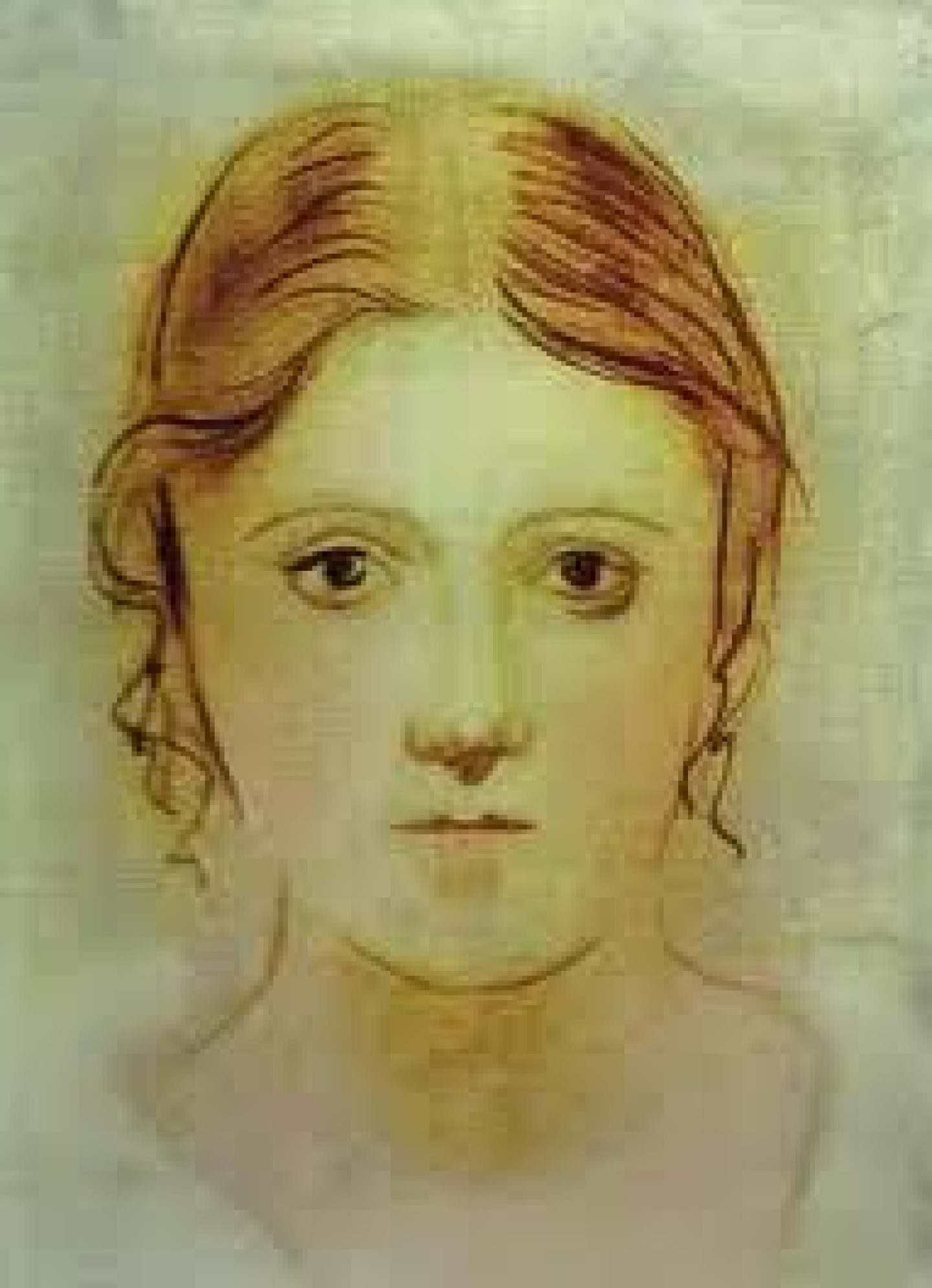
Una is the Doe, waiting on Emily. The purity, the beauty. What's there to say? That men gather mystical interpretations for events; they invent magical reasons for strange things. And, the poem rather gives an accidental reason for the White Doe visiting the grave. The story goes back, and tells a tale of the true, unmystified reason for the doe to visit the grave. The Doe visits Emily's stone. And that because it is her pet.

What it symbolizes, or what it means is simply the overreaching theme of Wordsworth's, which is the abandonment of superstitious beliefs, and to see the true cause behind them. Peter Bell had the same theme. Rather, to defeat magical thinking with good reason. To explain the doe's arrival at the tomb because it was the pet of the deceased. Not because it was some form of magic, or the doe were a magical totem. Rather, it is to discover the meaning behind the events. The passivity of the characters are reminiscent of Martin Luther King or Gandhi. Nonresistance, and protest. Though it doesn't stop the war---it effects nothing; still, Francis' resistance displays the foreknowledge of the just cause, whom according to the poem's schema the Catholics cannot be in the right. And the end is disastrous. Emily is alone, with only the White Doe as a friend.

And on the third canto, I come to the crux. It's amazing how on the very day I find this artefact from history---the mysterious sign in 1561---this very day, I read the White Doe of Rylstone, where it describes the meaning of the vision. The conflict between North and South, the conflict between Prod and Pape---Wordsworth even in line 258 quotes the very sign I saw, "A spot of shame to the sun's bright eye. " and can be recorded. The mystery of The Great Song is revealed. The vanity of the war between Papal Authority and Protestant Authority. The great destruction it reaps, and the great doubt, where good men fight good men in vain combat.

I find there is no better proof for God than the timing of this little miracle. One of the finest, and I'm glad I can record it today. 1/21/22, I had found this little wonder and researched it. The sign in Nuremburg in 1561. And that is what this poem is about. Exactly what I extracted from the sign. Wordsworth says, " They that deny a God, destroy Man's nobility :" and this little miracle is proof of God's existence. I had not planned this; yet, there it is in history. A one in a quintillion chance.

And the Fourth Canto expertly tells one of the great futilities of war. Men are given to a cause, rallied, but few are given to the cause; thus, the greater army prevails. In a way, Wordsworth is affirming the Fatalistic view that the right side wins its conflicts. I'm a little more leery of believing that. I don't think enthusiasm for a cause necessarily makes the cause noble. It is very possible for there to be so much enthusiasm for something outright evil, and it then prevails and creates mischief. And men, being given to the idea, to think it noble, bring themselves into tyranny's bond. Wordsworth obviously believes the Catholic Army of Seven Hundred is fated to lose their battle; because obviously they are in the wrong. I've seen other truths unfortunately. The changing of times, from bad times to worse times by the consent of individuals who think the worse is nobler than the previous. What's the worst is seeing something good, and knowing it is good, and watching all enthusiasm for it wane. It's like that moment in child's play where the kids get bored of the game, and migrate to some other place on the playground. War is no different. A time's zeitgeist is no different. There are those who wish to resist, for living is worse than dying.

I reflect on that particular thought, with regard to Patrick Henry and Thomas Paine. I have no doubt that if Patrick Henry were alive today, he would be as adamant as me for retaining liberty. However, Thomas Paine would be a recluse, fearing for his life. Thus, Common Sense wouldn't be written today; for Thomas Paine the tyranny would be his rebellion, for fear of a slight chance of getting sick. There was a time period where even the most ignoble man had nobility because God's law reigned on every man's heart, even those who rebelled against Him. I do hope I'm wrong.

And coming back to this story fresh, the battle is set, and Francis' entire family goes to war for the comforts of their faith. For the comforts of their old regime. And they stand on the hill, and fight. Emily, the White Doe of Rylestone, searches for her fallen brothers, and receives word that Francis still lives. Yet, it is only a fable. Francis, wishing to keep himself out of the war, even protesting the conflict, took up his ensign of his father's house, and was stricken down.

There is no better poetic ending for a man. It gives me great pleasure that Francis had not struck down a man in combat, but did take up the flag of his father. I feel like no better fate could a man have, to die for his country, for his freedom, for his beliefs, yet not have to partake in the bloodshed. To take up the flag, bear the standard, and rush into battle with your loved ones, your family, your friends, your ideals---as the social order falls around you. As the insanity of the world breeds confusion and chaos. To take up at once the cry for battle, the cry to defend oneself, yet to do it peacefully. There is no better way for a pacifist to die. It is the way Ghandi died. And Martin Luther King Jr.. And the way many other peaceful men died; with the banner in their hand, standing unafraid for their ideals, and to die serving the ones they wish to protect. Other great men of peace died in old age, warning of the social upheavals which would inevitably come after they had perished. Though Tolstoy and Dostoevsky were not martyrs, Tolstoy died vexed, trying to flee the world he saw changing too much. And no better way for a pacifist and poet to die, than to die with the standard grasped in his "Palsied hand". To refused to shed blood, but to allow one's own blood shed for the freedom of others. Yet, the sad moment we realize the battle Francis fought was futile. Henry VIII was going to be king, Protestantism was going to change the landscape of Britain, and in some ways cause frightful tyranny. Where, in other countries, Catholicism caused frightful tyrannies. In Wordsworth's day, it was the very cause of liberty that created a frightful tyranny. The ideals of America swept over Europe, infatuated by Voltaire and Rousseau, by the United States' democracy, they launched into bloody Tyranny, and when all failed, elected a King who led them on to more bloody infamy. Yet, the residual of that conflict had lasting impacts which freed me to write this essay, and be heard in Europe and now even in countries which censor speech. I am heard around the world. And if war came to my country, I would die like Francis. Yet, as I recently wrote, the blood merely washes down the stream where I feed, and here there is peace. War's tide affects me very little, except to amble down the waterways. I am glad to be blessed by peace.

And finally, we succumb to the ruins of Rylestone. There, where Francis lay, is the grave which holds him. The ideals are dead, and Emily is given a friend to console her. It is the White Doe. The white doe consoles her, and gives its love. It is an "Inferior Creature", that is, a meek kind of animal, thus gentle, and able to love a human. It is loved by Emily, and is her blessing through the heartache of losing her family to their ideals. The war took all her brethren, her father, and she was consoled by the miraculous friendship of a doe. Such a thing gives such promise to life. Such meaning. Such a rarity does console. Where something rare happens, where something unexpected, it gives the soul a comfort. And, the doe visits Emily's grave, as it was her friend. There, Emily is buried next to her mother, and the Doe visits the dilapidated grave sight. It is not a totem---it is a physical manifestation of a miracle. The doe, alive, befriended of Emily, visits her. It is not magical. It is not ethereal. It is physical, yet underlies what is a realistic miracle. One subtle, miraculous, yet believable. It is not something fanciful, something impossible;---it is real.

Wordsworth, William. The Collected Poems of William Wordsworth. Wordsworth Editions Unlimited, 1994. Text.