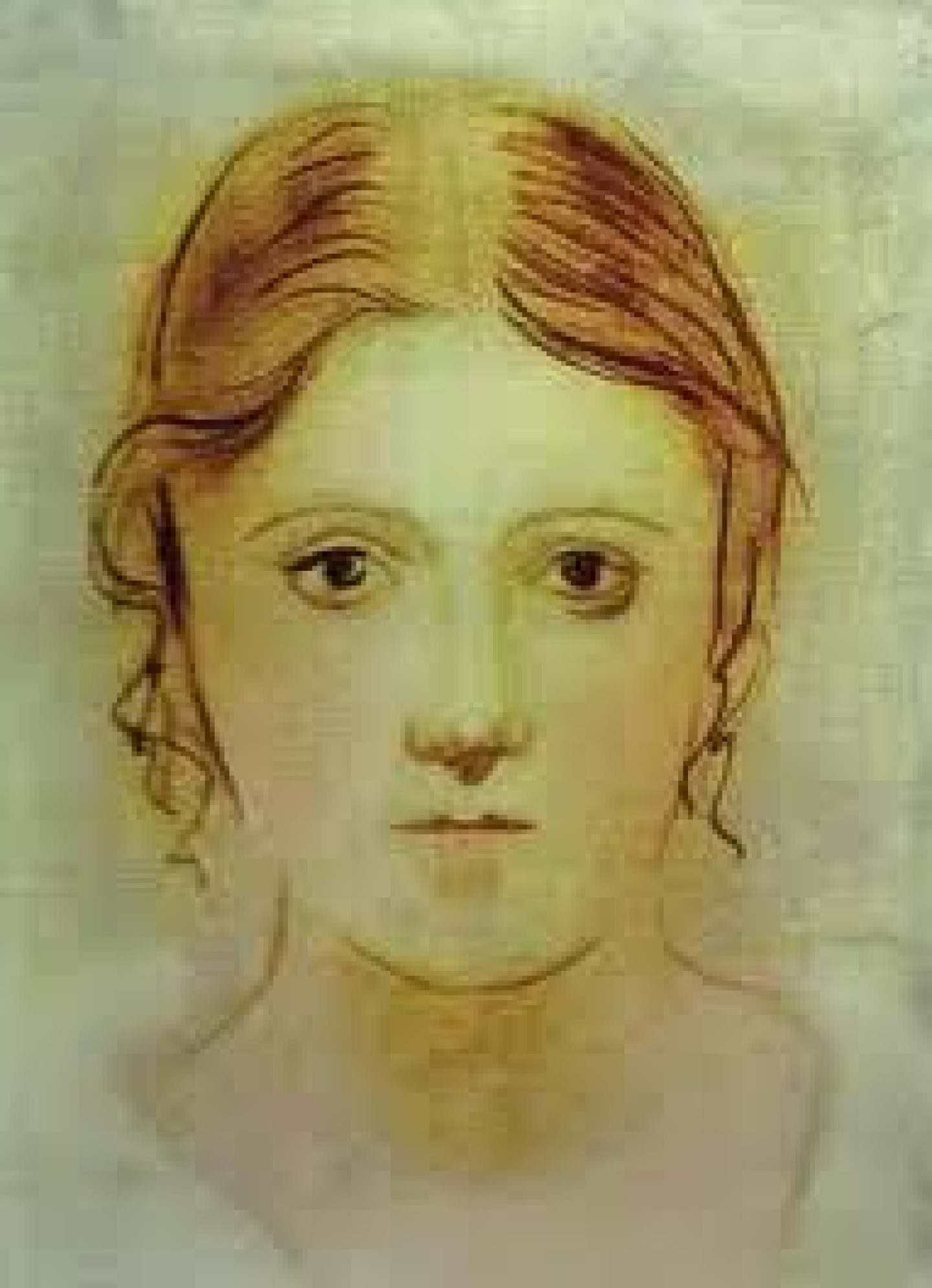

Thou Bull---Prince of Moab---
I fear to be thou.
For you burn the Moors
In your furnace---

You are an American Holocaust.
I fear, that by my prayers,
I have conjured you.
I fear it, and am greatly ashamed.

I smell cabbage, like the Boy in Striped Pajamas
Described. I smelt it while in prison
For my humble offense.
I do not know.

You Bull, whoever you are---
A demon presiding over America,
My Doppelganger,
Did Trump, Obama, Biden or Bush

Know of you? Who are you,
Specter? Only a dream?
Only a pallid delusion?
Or, are you real?

A phantom in my mind
Which causes great anguish.
I do not know, but I write of you.
Perhaps you are from another world.

Or, perhaps you are of this world.
All I know is the Bible Verse
"Thou Shalt Not Oppress the Stranger in the Land."
Category: Uncategorized
Interpreting the Bible with Hebrew As it is Today
In Modern Hebrew

Yeshuah, the Chametz, will be crowned king.
The Young Woman will be with child.
Kiss the Pure lest He be angry with you. The one Begotten by God.
There will be a New Circumcision that shall not be broken.
God has formed an Alliance with Israel.

In English

Jesus, the Branch, will be crowned King.
The Virgin will be with child.
Kiss the Son lest He be angry with you. The One begotten by God.
There will be a New Covenant that shall not be broken.
God has formed a Covenant with Israel.
My Little Pagan
How far you have ventured into the world of Rome;
How many beautiful things have you there unearthed?
You believe Ovid's report, of Romulus, et
Ramos torn from Greece to Italy's peninsula.
There they founded a Grecian Empire, built
From Greek and Etruscan mortar and Roman might.
For on the cusp, my dear, of Education's joy
You shall rediscover that Grecian influence
Over Rome. The religion, the architecture
The art, the culture. It will click, and be foundations
For a rich and deep understanding; the truth of Rome.
Like I when I forsook Paul's Words, now understood
The Hebrew Roots of the Christian's joyous light yoke.
For now I understood both; how truth moves to truth.
For, the joy of freedom is that you may be wrong.
The joy is that you are allowed to make mistakes.
The joy is, no government shall oppress thou to
Believe. It is your choice---yet, one day you shall find
The truth, and rubicund shall appear on your face
And your public declarations shall be made queer.
Yet, let no one scorn you for it, or ridicule you.
For that is freedom---to pursue truth-learning's joy.
For, it shall be a new discovery for you
Like the world itself had discovered the truth
For the very first time. And that is learning's joy.
Analysis of the Redbreast Chasing the Butterfly, By William Wordsworth
One of the most interesting things was observed by me, while doing an analysis of this poem last night. The fact that Wordsworth transposed his Shadow onto the Robin. Making the Robin equal to a "False Prophet." The text is clear... And I'd believe he's talking about Robert Southey, and possibly insinuating a superficial relationship between the two of them; at the end, he clearly says to either commit to the friendship or "Leave him alone." It's almost, however, like Wordsworth is transposing his shadow upon the Robin---as who the figure is is only speculative---there's some non compos mentis moments in the poem, where there's an allusion to misbehavior happening with children in the leaves. Where he gets this, is likely material from dealing with his shadow... as I struggle with imagery of the same. Just in different ways.

The poem struck me, as in my own poetry, there's this figure who's like the shadow. I make him into a doppelganger, and I understand him through Biblical Turn of Phrase such as Micah 7 where it says that "Our sin will be cast into the sea" or in Isaiah 53, where the poem literally says that Christ burdens our "Contagion" which I believe means something like "Daemon." The Shadow element of the soul, which the great poets touch upon. Even Bob Dylan has touched upon this shadow; the universal figure of the "False Prophet"; so has Byron, whom Child Harold's Pilgrimage is about his very shadow. There is a strain of great poets to be talking about this enigmatic figure. In Hosea it says "Death is more prosperous than his brethren."

This figure is ubiquitous throughout all poetry. It may just be the Daemon which Christ subdues for us. The burden which Christ carries within Him, according to Isaiah 53. Because Wordsworth is struggling with this deep imbedded evil. The truth is, Wordsworth struggled with Schizophrenia, and judging by my own dealings with it it normally is when our shadow comes into conscious thought, and the "Daemon" is consciously touched. Which causes the sickness of the soul, and thereby, creates the paranoia. Yet, the "Daemon" is burdened by Christ; the sin nature in all of us, which is capable of having "Covered with leaves the little children,/ So painfully in the wood?" and there's a question mark. It touches upon my conscience latent reminiscing of the Daemon... either projected outward or inward. In Wordsworth's case it is projected outward, into a persecution delusion. In my case, it's projected inward, into a Doppelganger delusion. In either case, we split the Shadow into an individual separate from ourselves. A lot of great poets do this, split the shadow self and lay accusations upon him. The closer that shadow is to our own person, the more we understand ourselves to be in need of Christ. Yet, it is the figure of "Death" which Wordsworth is talking about. Death is Who Jung called the Shadow Self; Our Sin Nature; or as Isaiah 53 puts it, our "Contagion" or "Daemon".

Wordsworth, William. "The Redbreast Chasing the Butterfly." Poem Hunter. https://www.poemhunter.com/poem/the-redbreast-chasing-the-butterfly/. 12.17.21. Web.
The Bluebird and the Butterfly
Mine befriended, I saw the robin fly
With his red breast.
He was loved of all.
He flew within the Kingdom's walls
And his acolytes were many.
For many watched him float from beam to beam.

Yet I, I called for you while in pain,
My songs of the Bluebird an American song.
I, the Bluebird,
Of the same genus as that common bird,
Am found in the woods with my special house
Made for me, so the raven's beak can not wet my blue dawn.
The Robin and the Butterfly did battle
At the park; I was the trickster
Who chatted ill in mocking song---
For I could no violence do to you.

Thou butterfly, fly into the air.
The Bluebird eats mosquitos;
So said the Ulrich
Whom I taught of Achilles shield---
The parasitic flies, does the Bluebird eat.---
Of peace, it is on Achilles' shield,
And the slaying of the Lion
By the Shepherd in the field.
And the sacraments of peace
Were dawned on that famed hero's
Hoplon, which in its circle did give justice to the war.
Know I? I fluttered to the Earth,
Though the Robin eats my portions---
He one day migrates to the South of Hell.
And one day I with my raiment dawning
Shall drink from Salvation's well.
How I Understand Math
One only exists if it represents a real object.
Half of one is equal to one if one makes the new half its own distinct form.
Addition, subtraction, division and multiplication
Comprise the four functions which describe all natural laws.
Pi is equal to the circumference of a circle, if the diameter is one.
The area of a circle is equal to Pi, if the circumference is one.
There are laws to how lines interact, which limits physical shapes.
i exists in three dimensional space only if the x, y, and z axis represent three dimensional space.
e only exists in motion.
Pi is calculated from lines of calculus atop lines of calculus, and infinite formulas over infinite formulas, and cannot be calculated by a single equation.
The quadratic equation can be used to calculate any four sided object's area.
Negative numbers only exist if physical objects are bisected by axis.
E=MC^2 means the energy which comprises an object is equal to the mass of that object times the speed of light squared---then, if any energy is added to that object and makes it move, one adds the velocity of that object times the speed of light squared.
All laws of physics can be represented in physical space.
The parabola of Quadratic Equations displayed on a graph correspond to real world arches, and the laws of gravity.
The axioms of Trigonometry create finite solutions for real world objects, and so do all other axioms of geometry.
The axioms of Trigonometry and the axioms of Geometry can be combined to find more complex shapes.
In the polynomial x^2+2x+34;  x^2 is the solution to the equation squared, 2x is the solution to the equation times two, and 34 is how many more units of one can fit into a four sided object. If this can represent a real object, the solution will have at least one positive answer. If not, the answer will be either negative, or have i within the solution.
The quadratic equation works based on the geometry of four sided objects, and within the algebra, one can understand the very workings of quadrilaterals.
Calculus can be used to determine a square root, because it is a simplistic logarithm of division, which can be represented by calculus.
Newton's Laws of Motion and Even The Laws of Thermodynamics can all be represented by division, multiplication, addition, and subtraction. These basic functions can be used to represent all forces in the universe, including chemistry, motion and the laws of matter and quanta.
The Laws of Euclid state that all finite matter, with finite lines, can only divide into a finite object a finite amount of times.
The Planc Length is the smallest unit of solid matter known to man, however, energy exists beneath it as infinite vibrations. Therefore, all matter is vibrations in an infinite vacuum of space, both macro and micro.
Infinity is the only rational way to explain the Universe---for, even if the universe expands, there is that which it expands into. For, there is no place, rationally, where empty space will not be. There will not be a place where there does not exist Therefore, infinity is the only means by which we can determine the universe... true infinity, not numerical infinity.
Chess is not truly an infinite game---not in the true sense.
Aleph Null, being the infinite set for one universe and all the multiverses within it, can be duplicated by a second Aleph Null of another universe with multiverses within it.
The Higgs Boson Field is discovered because a Muon, if calculated to be equal with the ratio of the mass of electrons, only appears at less of a percent than the electron when a beauty particle splits. Meaning the Higgs field is the difference of that which binds the subatomic forces.
What Jesus Wrote in the Sand
Jeremiah 17:13

O Lord, the hope of Israel, all who forsake you shall be put to shame; those who turn away from you shall be written in the earth, for they have forsaken the Lord, the fountain of living waters.

John 8:6

This they said, tempting him, that they might have to accuse him. But Jesus stooped down, and with his finger wrote on the ground, as though he heard them not.
Faith
How to describe Faith:
I find translations of Isaiah 53 from the Great Isaiah Scroll.
I find five website which confirm it's in there.
Even the Museum states it exists.
I find it's carbon dated from before 230BC.
Faith is just like this:
I cannot read the Great Isaiah Scroll for myself.
But, by all this witness testimony,
I know it to be true.
The same thing is with Faith in God and Miracles.
Gay Rights
They stop the flood at catamy
They stop the flood at zoophilia.
Thus, for a thousand years
Men compete in women's sports
Breaking their records.
For a thousand years
Marriage is at 17.5%
And two parent households;
A commodity for the rich.
For a thousand years
We cannot say "Homosexuality is a sin."
For a thousand years
We cannot question whether our spouse
Is truly a woman,
Or if a woman,
Truly a man.
For a thousand years
We preach "Tolerance and Inclusivity"
So that every child has an acronym
Every Ze and Zer and Zim
Has replaced He, and Her, and Him.
For a thousand years,
America survives...
They eat, they drink,
They break bread...
Christians are not pogromed,
But are forbidden from worship.
Religion is underground,
So is Classic Rock, and so is Poetry---
Nobody reads books.
For a thousand years.
For a thousand years,
We are coerced into vaccinating ourselves,
Wearing masks,
And our children can only attend school
If they fit the mold.
For a thousand years
Nobody has belly laughter or true love...
For love is only chemicals.
I'm glad I only will live a fraction of them,
If the world continues just as it is today.
The American Civil War
The American Civil War
So, you all listen good, now you hear? Here’s a story about a war for American independence, yet we’ll all know at the end just what independence was won. You see, there was first Andrew Jackson, who claimed that Life, Liberty and the Pursuit of Happiness was America’s highest ideal. Yet, Abraham Lincoln found it mighty ornery that a war was fought for the American Slaves, and they were still poor. So, Honest Abe rallied his Costs to a mighty outcry against the Cents, that being Old Hickory’s government.
So Honest Abe had his men from the Coasts rally to their cause, and the good Ol’ Cents, who had less troops, but more true grit, rallied their men from the Mainland. The people of color, so said Honest Abe, needed to be freed from the tyranny of the Cents. Old Hickory replied that they had equal opportunity, and rightly he believed it. This is where we got into some trouble, was that both sides believed they were right. In truth, if I may put in, for I’m good old Patrick Henry, I saw no reason for war. Yes, the poor little blacks were a little poor; but it was the Costs policies that made them poor. The Cents, however, stripped every bill passed through congress of its good charities, and there we got into the fact that what I fought for so long ago was no longer believed. Men should have plowed their fields and eat. Instead, they made laws all day long, and it cost about one hundred thousand good, fine men and women. I, on the other hand, sat in my lonely abode watching the cannon flashes at night. Sometimes one of those cannon balls would darn near smash into my barn, or take out my wind chimes. But I was in no danger. They tried to draft me, of course, but I would not be drafted, for I said, “I see two United States here, and one of them has to win. I’m not fighting for either one, as I like the ideas of one, and also the other, but hate them both the same.” So, they left me at my house, and here I wrote this story.
So, there was the story of Bonnie and Clyde there reaping a storm in the West. They were Costs, and they took some men’s bread, and thought it a good thing to give it to the poor. They were Robin Hoods, of course; just outlaws, so they thought, but they made men poor and put them in the poor house. For what? So that the poor could eat, yet the poor couldn’t eat, so their little robberies were for nothin’ that I saw. I heard them out there where Wyatt Earp and Doc Holiday found them. These two were a stickler for Justice, and once put a man in prison for being in the wrong place at the wrong time. The poor man had a tissue he owned at the local bar, where a man was shot dead. That tissue, they said, was the damning evidence of their sin, so they locked him up. Where that man is, I don’t know?
The two, Doc Holiday and Wyatt Earp, had a blood lust, too, and they’d shoot up outlaws all the time, yet Bonnie and Clyde weren’t going down so easily. They racked themselves up in the local bank, where Wyatt and Doc had them hunkered down. Old Doc called Bonnie and Clyde to come out, when Clyde took his Colt ‘45 and shot four shots that killed Doc Holiday down in cold blood. Wyatt drew his gun, and fired three shots, hitting Bonnie in her breast, dropping the woman, not after she let off fifteen with her Tommy Gun. Wyatt and Clyde were the two standing, and took to the street, where Wyatt drew his pistol in the open air, and five shots rang. There, Clyde fell, not before Wyatt burped up a bubble of blood, staggered around in the misty dust, and fell with a clink of his spurs. Twenty-seven shots were fired in that town, and four men killed.
Paul Bunyan, another Cent, was out working in his forest, when Henry Ford came by with a proposition. He said, “I’ll give you a day’s salary to come work at my steam shop. All you need to do, their friend, is give up your axe and come work with me.” Paul, being a man, and his ox Babe, refused. So, now you see, Ford got the better of him by making a steam engine that cut down his whole forest. Now, Paul and Ford got into a heated lawsuit, which Ford won quite easily, and there was old Paul Bunyan, who could chop down a tree with one swing of his axe, and lift it on his shoulder. So, he took to a test of strength, where he and Ford would match wits in the forests. There, Paul and the machine started, and went all day. Paul chopped down one tree, the machine chopped down two. Paul chopped down three trees, the Machine chopped down four. Paul chopped down seven trees, the Machine, well, it chopped down more. So, it came that at the end of the day, Paul was sharpening his axe; he whittled that axe down to a splinter, and there was Babe, heaving. Old Paul stood up once more, and dropped dead, after a whole day’s of chopping the forest. The Machine, there it sputtered, and heartbroken Babe moaned on the river side, where she fell into the water. The machine hacked up a bolt, and there it crumbled. Ford, though, could care less about it, for the man Paul Bunyan was dead. And there, my friends, if I may weigh in once more, was the point where American industry died. As, Paul didn’t want to work for Ford, and wanted to warm himself with the logs he cut down; no idol ever made of them, for he was an honest man. Yet, poor Paul fell quite dead that day because he couldn’t out match the machine. One of him, an exceptional man, was not enough to match a thousand of Ford’s machines. And, here Ford is today, making more of those, so that where is Paul Bunyan these days? Ford lied, and said he was the Cent. In truth, a Cent was killed by a Cent, for the good working man Paul Bunyan was outdone by the Captain of Industry Ford. And here, we still see Ford to this day with Paul as his own hero; yet, it was his machine that broke him.
Jessie James, now, was a reckless outlaw, who’d murder for no reason. In his eyes, this was the American way, a Cent of the ages. For, he’d go out and do what he thought, a great liberator; of what, nobody knows? He’d go running his mouth at everyone, thinking he had this as his freedom. He’d run his mouth, run it quite often, you hear. He’d pick fights with the local barkeep, he’d pick fights with the local tavern owner. He’d argue all day, and truly believed this was his right, to be free of speech. One day he killed a man in cold blood, and then went running from the law, believing himself just in the killing because he had a beef with the man. So there came Al Capone one day, a Cost as would have it. The Costs and the Cents had no problems working with each other, as the bloody war took American lives. Here Capone set Jesse to work. There, Jesse would drive his Model A through the streets, robbing banks, shooting men dead, when one day Capone, he saw, was rich. For Capone was a bootlegger, and Jesse James was an Outlaw. So, the two made their rounds, and Jesse extorted some riches from Capone, which got Capone as mad as a wolverine in heat.
Jesse, though, was shot down one day on his run to a bank by none other than Capone; as it was, Jesse, Capone didn’t like was spilling secrets; as Jesse was no stranger to recklessness. A murderer, a robber, but a man with a cause. Capone needed his secrets kept, so shot that man dead. Yet, Jesse was outspoken about Capone’s prohibition, as Jesse believed wholeheartedly that Alcohol should be legal, yet one day Jesse talked about a shipment of guns going to the Costs, which Capone was running to support the war. Jesse, a tried and true Cent, exposed the thing, but was shot down by Capone with a Tommy Gun. Capone then had the weapon hidden, but no sooner did he hide it, that Pecos Bill, that highbrow American Ideal, a Cent tried and True, rode in on the moon as his horse—kind of like a bucking stallion you see, for he never would blow a kiss to it—and lassoed that Capone and hung him up there on the corner of the moon. There, you see, if looked wide at night, will see a good old Capone hanging off the crescent; I say, such a thing was oddly amusing.
Good ol’ Johnny Appleseed, though, was a good man. A Cost. He saw a dearth of trees when the war was blowing them all to splinters. So, good ol’ Johnny went through the countryside planting them, planting them, planting them. The President at this time was Theodore Roosevelt, of the Costs, and he built parks for Johnny to plant, and other trees. Goodly gardens he made, goodly gardens.
There was also Lewis and Clark, Cents by right, who like Johnny didn’t care much for the war. So, they moved to the countryside, and there pioneered a Settlement called St. Brandonsburg—which lived by that good parchment—and was neutral in the raging Civil War. There men could live without war, farm their land and swim in the rivers. The merry little town was named after a patriotic hero who himself didn’t like the days he was seeing, and spread the message with his songs. For St. Brandon, that rigorous patriot, didn’t taste of death, but rather is the one writing this song you see, a true Patrick Henry.
There once also was a man named Davy Crockett, a Cent. He was for the Cents no matter who listened, and good ol’ Henry Ford, and good Ol’ Hickory were his heroes. His country could do no wrong. Crockett was a frontiersman, and there he was caught at the battle of the Alamo, where nine thousand Costs rushed him from California and New Mexico. So, the legend has it, Crockett fought till his dying breath; He loaded a shot, and fired, and dropped five men. He used his knife there to skin some Costs. Yet, at the end of the battle, there lay Davy with the last of his men, all wounded and full of pride. A Texas Flag flew, with an American Flag underneath. Good ol’ Crockett understood something right before he died, I’d like to think: It’s the states that were given their rights. Rightly he knew that, but Henry Ford and Wyatt Earp were no good scoundrels. So rather than fight for his country, he took up the Texas Flag and raised it high on a banner, with the American Flag underneath. There, he saluted his flag, and with his beaver pelt on his head, and his deer skin leathers, and moccasins, there Davy died, last of the fighting men, with nine thousand Costs lie dead around him.
George Washington, a grand man, saw his fellow Jesse James, and the notorious things he slandered his country. So, Washington wrote a message to Andrew Jackson, pleading with him to end the war. Jackson, of course, was driven into blood lust, where he challenged Honest Abe to a dual, and there shot him down through the head—for he went crazy. This was why Theodore was the new president of the Costs, but Old Hickory was thrown into a blood lust, as, rightly, Ford was his Vice President, and the word of Davy dying for the Texas Flag got him mad as a hatter. Washington, a rightly man, sent his letter to Old Hickory, but this was nothing good. For Old Hickory heard none of it, but liked good ol’ Jesse James. Pecos Bill, where was he? The good ol’ Pecos Bill had died the moment Hickory shot that Honest Abe dead, and Washington was crying a shame about the war.
Folk, I see you’re wondering what this is about, aren’t you? Well, what I’m going on about, this Patrick Henry you see, is that we don’t live in a time for revolution. Why would you want honest and bad men to die? For, wars do these things, good ol’ Paul being killed by his own, and Davy dying for the wrong flag? Yet, I say there’s more to my story friends. I’m not quite finished yet.
William Penn loved Sacajawea and her people. Yet, he saw that his people needed land. So, he had a covenant with them, that as far as a man would walk, that would be his land. Good ol’ William died long before the war, but Sacajawea’s people were hard pressed by something new. For, aren’t we all just Sacajaweas? There went Penn’s sons, running instead of walking, and here they got all of our land, all of our livestock. I personally had nowhere to live, if you must know the truth. William was a Cost, his sons were Cents, and there Sacajawea and I sat on my old hickory rocker, and here we talk some about what ought to be done. Her, she says I should write this silly story. Me, I say nothing can be done, as there William Penn died a long time ago, and his sons came in his place. Married his daughters to Henry Ford, and I have to say, the crisis now is pretty high minded. My father told me this story, and I figured I ought to too. As the cause of this war was Penn’s sons, so long ago, running, and their sons running faster. Where’s good ol’ Patrick’s money? I can barely put bread on my table, you see. I just sit here, eating the lemon and onion grass, with the Milk and Honey I get from my bees and cows. Not much grass grows these days, but they eat the thorns, so said the Prophet. And I enjoy writing my little stories; as, I suspect that this war was for the worst, but I’m still here. I’m also not complaining; I just have an ugly truth to tell, and that’s the truth of our war. Penn’s sons, running to overtake Sacajawea’s people; all the poor are her people, and so the Costs had their claim. Yet, look who died? So foolish, I’d say, yet even with all of this, the war’s not over. No sir ee, it’s not over yet.
Casey Jones was a good ol’ Cost, who was under the thumb of Henry Ford. There, Casey ran his train double the time, shipping the guns and alcohol, but always was on time. One day, good ol’ Casey gave a sweet kiss to his wife, and a song was sung in his head, “This is your journey to the Promised Land.” Casey didn’t think much of it, but Casey had a whistle on his train that he built, so that Casey would never hurt nobody on his runs, for he didn’t like how fast he flew for that Henry Ford, nor Al Capone. Casey, the day he died, was driving at full bore down the train’s track, and there, good ol’ Sam Weber saw a train parked on the locks. Casey yelled with all his might, “Jump Sam, Jump!” And Sam Jumped, but good ol’ Casey stayed on the train, and hollered his horn, slammed on the breaks, and there the engine squealed, where Casey was killed when his train hit the caboose. Casey died that day, taking with him the Alcohol of Capone and the guns of Ford. Though, Casey had no real motive for doing it, other than to save a life. Casey once saved a child on the Train Tracks, and there he tried to slow down his country some say, but he couldn’t, for that train traveled too fast, and Casey knew it, but being a hero for his punctual nature, he then became a hero for saving lives. So, that’s the story of Casey Jones, A Cost who just did his job, and the speed of the trains were what killed him.
So, this is the end of my story. The war ended at the death of Casey Jones, for the whole reason for the war was all twisted up and foul. For good ol’ Casey was there, running his shipments for both Capone and Ford, and ol’ Hickory heard of the man’s death, and that his guns were on the train, and Roosevelt heard of the report, that one of his men was killed shipping bootlegged booze. Thus, Casey’s life ended with the stopping of that train; so did the war, as both side’s goods were on it. And there Casey died, and the people found it better not to war over such things, as a man like Casey Jones, Paul Bunyan, Abraham Lincoln and Davy Crockett died.
So, my friends, if you must know the purpose of this story: It’s just a story. As I rightly am a Patrick Henry, and I cry, “Give me Liberty or Give me Death.” Rightly, I’ve had my liberty to write these stories, and the real culprits I hope you see aren’t Roosevelt and Hickory. It’s that Capone and Ford, as I’m still sitting here poor, and with nobody, as I write this story, and rightly, I ought not be so. So, whose side am I on? I’m a Cost, and that’s where Patrick Henry always will be; but I’m no Cost who would take up an arm against such a thing, as is just the way of the world; and good men have a tendency to die when wars begin, as the war we have to fight is one of talk; otherwise, the war won’t ever stop until a good man gets caught in the snare, and he ends up telling us how stupid we all were.
Neifert, B. K.. My Collected Writings. Kindle Direct, (C)2021. pp. 50 – 57.
 B. K. Neifert