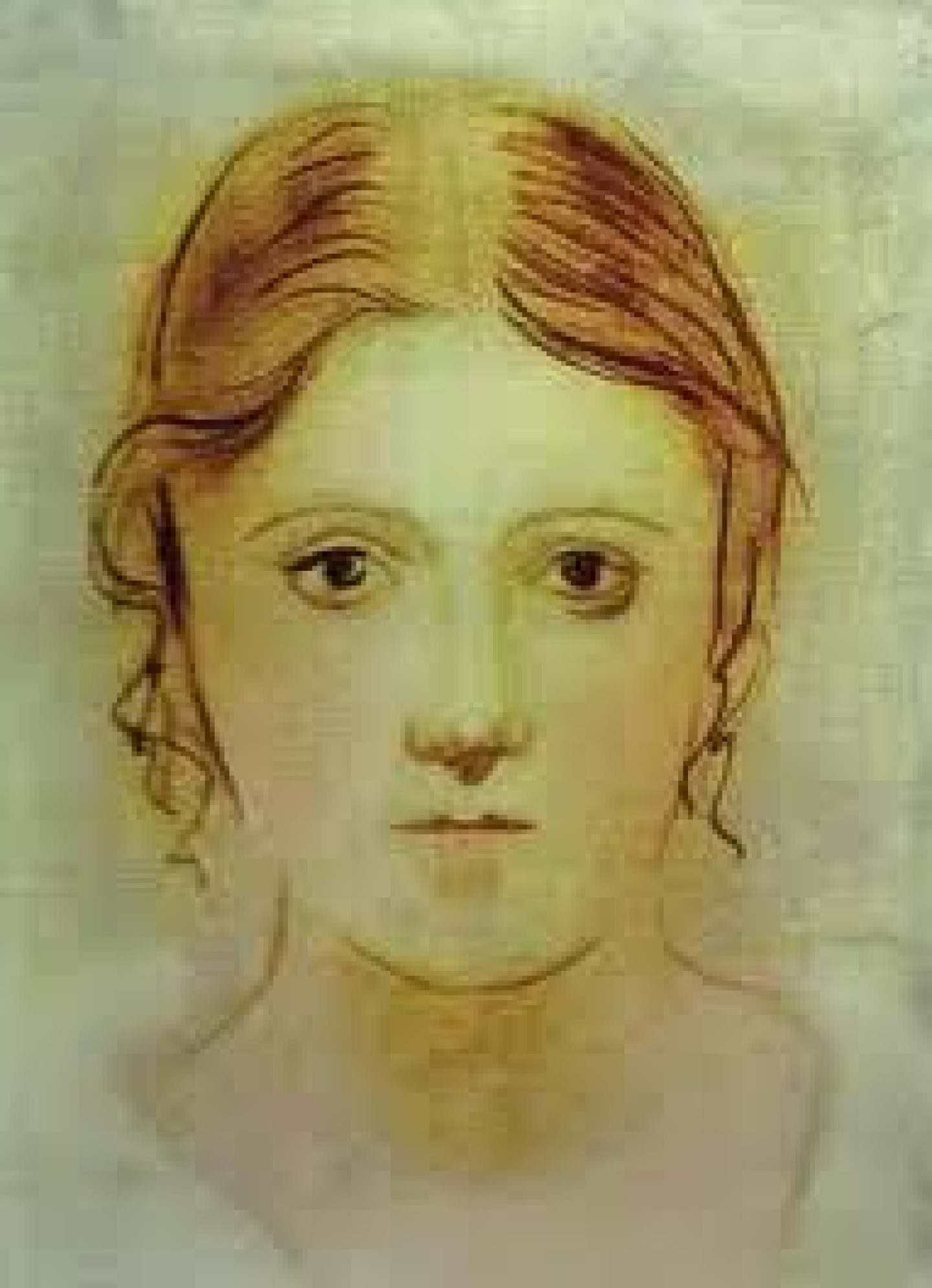

Jesus was an INFP. Not an INFJ. And I'll explain why.

Jesus was introverted. As opposed to extroverted. He had twelve apostles follow Him around, but he got most of His energy by spending time alone. We know that Jesus was in prayer at this time, so He was setting an example for us to follow. When we need recharged, to go out into the wilderness and pray. Yet, Jesus would also leave His disciples, and spend time in the desert, or in the gardens, or once even leaving them unmoor their ship, while he stayed on the coast, and then walked to them atop the water. Jesus was certainly an introvert.

Jesus was intuitive. Intuition is the ability to see things beyond what we sense. It's the ability to understand things without having direct evidence. It's a key aspect of faith, but Jesus was intuitive---prophetically---knowing details about people's lives without having known them. He wasn't a fortune teller, but rather had direct revelation from God, yet we can say this is a sort of intuition. Not to mention, His teachings peered into the very workings of true ethics. No sage in history had ever developed a more cogent philosophy. No sage could. Some tried, but they were far behind Jesus in their understandings.

Jesus was a feeler, not a thinker. He was empathetic, compassionate, and He loved very hard. He once made whips of chords and cast out the buyers and sellers in the temple. He had wrath, but He also had moments of great compassion. When He set free the woman caught in adultery, or when He had compassion on the Samaritan woman at the well. Or, when He healed the invalid at Bethesda. Jesus was compassionate---some men don't even understand the compassion of Jesus, and the goodness of Him.

And here's the controversial one. Many people place Jesus as a "Judger." Yet, Jesus said of Himself, "I have not come to judge the world, but to save it." Judgment is the ability to prioritize, create order. Jesus lived His life in disorder. It's an interesting thing about Him, that He moved almost like a ship being blown about by the wind. And the Wind was the Spirit. He didn't plan---He forbid planning---He forbid judging, and the Judge sense is one who constructs a sense of right and wrong, and orders things around them. The Perceiver is one who, rather, witnesses things going on around him, and attempts to understand it. Though, Jesus would understand intuitively what's true, He also saw things as they are, as opposed to creating a personal sense of "Ought". Which is interesting about His teachings is that there is no "ought" about it, but rather they are an accurate description of how moral truth actually is.
Writer not a Gamer
You were always better than me at games.
I'd fight my way to Great Tiger
And you'd fight your arch nemesis Mr. Sandman.
I remember at Stratego, you placed
Your troops in illogical order.
No bombs surrounded your flag.
I'd send my rows in columns,
My massive armies,
And you'd take one little guy
And decimate an entire force.
Haphazardly, the guy would walk
An eight getting blown up with a bomb.
My generals would defend, but the damage was already done.
Star Wars, Donkey Kong, and Punch Out
Mario, That game we borrowed from Meredith,
You were always better than me.
I play my cards... but lose.
I can see the strategy to win the game at Risk,
But I refuse to conquer the world.

You were a hero to me,
Able to get to Mr. Sand Man
And beat Soda Popinski.
Your epic foe, Mr. Sandman.
Once, I think I saw you get to the guy
Right before Mike Tyson.
We were never a gaming family...
My scrabble skills are par excellence.
I am able to score above three hundred and seventy
In a two player match regularly.
But, that just gets to my real talent.
Words---I love them.
Meaning. My childhood obsessions
With gemstones, coins, rocks, plants, birds,
Animals, Alcohols---I wanted to know every kind.
I wanted to know all the different things.
I was very curious... always compiling facts
Data, in encyclopedic form.
Stories I loved, art... I still gorge myself on art.
The more fantastic, the more I loved it.

A part of me would like to be good at games.
But, I am not good at them.
I never was. I'd get to Great Tiger
At about the age of seven.
I showed no prodigiousness at games.
I can understand the rules...
I'm good at memorizing specific details
And remembering after a long time how games ought to be played.
But, even chess, I didn't know about En Passant
Until I was about twenty-four.
When John played a trick on me, and I thought he lost his mind.
I thought I could get one past him
By jumping my pawn past his.
And that's when I learned it.

Our family, loving games, were not top quality gamers.
You could just barely beat Soda Popinksi. He was a rival of ours
And I'd watch you, with starry eyes,
Sometimes get to the Sandman...
And he, he was our arch nemesis.
And once you beat him. Only once.
And you got knocked out in one punch
By Macho Man.

I guess I'm saying I ought to be a writer.
As, the only other thing I could be is a gamer.
And I'm not very good at games.
Love you, Mom.
Uncle Don
A cherry Chevy in the Apartment's garage
Sits with a lock and a yellow sign with a handgun on it,
Warning not to enter. A laborer of Caterpillar
A father to two, a good husband...
His PA Dutch accent was thick.
He was simply spoken, a hard worker
Wore suspenders... He was Blue Collar Pennsylvania.
I already miss him.

He dated a black woman.
This came as a surprise to us.
He was soft spoken, and once told me
That on an occasion where corporal punishment
Was being used, he took the belt from Pap-pap
And told him, "That's enough of that."
He owned my Great Grandmother's apartment
Which housed her nicely through her life---
That apartment was in our family for generations.
Later he would rent it out and tell us about the tenants.
Some were good, some were bad.

He was salt of the Earth.

There was a twinkle in his eye
When I would tell him about my jobs as a Tree Trimmer.
I never made it at that job,---
A friend always "accidentally" sabotaged my work;
But, I don't remember Don making me feel inadequate.
Rather, I think he was just proud that I put in a day's real work.
He'd always tell me, "You staying out of trouble?"
I'd say, "Always."
We'd talk, while he would smoke his cigarette.
Cigarettes into his seventies---
He and his son would talk mechanic talk
Smoke cigarettes,
And I felt welcomed into the conversation.
He never judged me.
Probably because he and I thought a lot alike.
Mostly alike. That generation I have a lot more in common with
Than my own.

My Big Black Lab was---for a time---
Not a nice dog. Uncle Don walked through our front door
And kneed him in the chest and literally scarred the shit out of him.
He was not a guy you wanted to be on the bad side of.
He was strong, muscular even into his old age.
My Mom said of an old picture of him, that he was a "Hottie".
He was strong, forgiving, righteous,
And I remember him driving me home from my Aunt's
We had a long talk. We both agreed that our cousins
From out of town were... well... a little bit too liberal.
I don't know if I talked about Jesus with him in that car ride,
But I lived and talked about Jesus a lot.
I only hope somewhere, through osmosis,
He gained a confession.

Yesterday, there was a light in the sky.
My dad and I thought it was a planet.
I went in, and brought out my farmer's Almanac
Which I had just bought, seeing if it were Venus.
It wasn't. Rather, it was a light in the sky,
And I'd like to think that it was his soul passing onto heaven
Checking up on us one last time.
I know he found Jesus.
My Thoughts on Feminism
Here are my honest thoughts on it. If it offends you, then so be it.

In places like Mumbai or the United Arab Emirates there is a desperate need for feminism. I listen to them, and I applaud them. Using their bodies and autonomy, it is different than a cropped haired, sweaty and pig ringed feminist in America. Where, the only thing they fight for, is to grow body hair and fight a mythological patriarchy.

There are two different kinds of feminists. There were the Flappers. Who, rightly, cropped their hair and later would win the right to vote. Then, there is the piggish feminist who uses sex as a weapon to frustrate her male counterpart.

Women ought to vote. They ought to run heads of state. They ought to run businesses. Where I draw the line is at a pastor---but that is settled in my religion. It is not something I extend to the world around me. Women ought to have sports they can play---specifically for them---they ought to compete with men at chess and cards.

What women ought not do, is fight a never ending battle to win ground and replace polygamy with misandry. They ought not divorce. They ought to remain at home if they can, and raise the children. But, so must men in my estimation. The point is, stability needs to be at home, in the family, where most of the true love is formed. Where people can grow, connect, and be close to one another.

There are feminists I applaud all around the world. In China, India, Pakistan, Iran, Mongolia... A woman in America has no right to be a feminist. All her battles are won. Anything more is merely pushing to a line that ought not be crossed. As, the gender wage gap is not real. It is, rather, explained through very real facts about being a woman. Facts that need dealt with and thought about, before a woman ever decides to have a career.

There is nothing a woman cannot do---but by personal judgment, there are things a woman ought not do. That is the culture I want. For instance, making women work, and forcing them to obtain an income is counter against the nature of womankind. Simply, there's a lot of problems created by single motherhood, and there are a lot of problems created by two parents working. There isn't enough attention given to the kids. And, they grow up to be little monsters. But, an absent father---always at work---is just as dangerous as an absent mother. In my estimation, parents need to work from home, and take care of their children. School their children. Do the bruntwork of the raising of their children. As schools do not love children like mothers do. And the most severe kind of love, is a mother's love. Separating her from her child is a crime, and forcing her to do wage labor is a crime. It's a crime. Should the woman want to do it---I see no problem with it. But, ought the woman do it, or else suffer consequences? I think that is the crux of the wage gap issue. And no... women ought not receive stipends for leaving work. They and their husbands ought to work from home, or run a family business as I've seen so often done by immigrant families.

That is my thoughts on Feminism, and if you believe it diverges off the course of the topic...  disagree. These fundamental problems are at the root of the feminist movement, and I offer common sense solutions which will work.
Uncle Tom
What does 2Pac and a Racist White Southern Scholar have in common? A lot, actually. They both believe the Civil War was not fought because of slavery, and they both probably use the slur Uncle Tom.

Let's just go down the line.

First, the Civil War was fought over Slavery. There can be no other reason for the war to be fought. Mark Twain, having joined the Rebel Army, left the army the very same day. Why? Because he was told it was about protecting the South's right to own slaves. Abraham Lincoln couldn't avoid civil war because the die had been cast. Slavery would be abolished soon. The South, forecasting those devices, preemptively started the bloodiest war in American History.

Uncle Tom, as it were, was a widely disseminated tract in support of abolishing slavery. Uncle Tom was a Christ Like Figure who died in service to his fellow blacks, dying so they could run free. Then, the war garnered such support for the abolition of slavery, that people actually joined the Union army in droves because they had read Uncle Tom's Cabin, and felt sympathy, as the work humanized black people in the eyes of white Northerners.

Also, the Battle Hymn of the Republic was written for the express intent of freeing blacks. The Northerners had the song, sung the song---as did the South, but they just appropriated the song---and the North sung in the lyrics, "He died to make men holy, LET US LIVE TO MAKE MEN FREE, His truth is marching on."

Also, the reason Uncle Tom is a pejorative, is because racist Southerners created journals which stigmatized Uncle Tom, and they began making satirical plays called "Tom Plays" Throughout the South which made Uncle Tom into a racist figure. It was, for express intentions, the White Southerners who created these Tom Plays, as they were salty for having lost the war due to the enormous recruitment by the sentiment Uncle Tom's Cabin created.

Then, if that weren't bad enough, those same journals created the stigma against sentimentalism in art. Bleeding into our current situation where gaudy and grotesque and bathos and scatological art is patronized. Because beauty, and all sentiments of feelings which are pure and awesome and right have been deemed as "Kitsch" by a group of racist White Southerners looking to do as much damage as they can.

Now, the Black Lives Matter movement is a propagate of these same Racist Southerner's ideas, by calling productive Blacks "Uncle Tom", by scathing beautiful art, by hating intrinsically well formed material. 2Pac couldn't be more wrong about the Civil War. Every drop of blood spilled was in the aim of ending Chattel Slavery. The Fourteenth Amendment was drafted as a direct result of the war. The Emancipation Proclamation was created because of the war.

What's truly racist, is Black Lives Matter because it is the invention of the White Southern Racism, to create a straw man, enemy image to burn down as an effigy of rage in the face of White Nationalism. Do not be fooled.

Stowe, Harriet Beecher. Uncle Tom's Cabin. 1852. With Introduction, Notes and For Further Reading, by Amanda Claybaugh. Barnes and Noble Books, 2003. Text.
“Fear Not, Thou Worm, Jacob”
This verse came to me in the book of Isaiah. And, it occurred to me, "What is the intelligence of an Earth Worm." I wanted to know, so I could accurately gauge my intelligence with regard to comparison with God. Not for pride---but, to get an estimation of what my intelligence is compared to God.

It became apparent to me, that an Earth Worm has a little cluster of cells, that are somewhat similar to the human brain. Yet, that pathway is mostly used for instinctual operations in the Earthworm. It doesn't think, so to speak, but rather moves with a sort of instinctual intelligence. It may even have some form of memory.

It became clear to me, however, searching another database, that Darwin and a philosopher relegated them to having an intelligence incomparable to that of a human's. That a dog and man had more in common, and had certain reaches of intellect similarly. Such thing may be mystically referred to the Cherubim, something like comparing a man to an elephant or dolphin. Yet, a man and a worm are two, incomprehensibly different forms of intelligence. It's the difference between a little cluster of cells which form complex behavior, and an entire neural synapsis developed for memory, problem solving, speech and higher rational functions.

A human and worm are so far removed from one another, that they are two entirely different forms of intelligence. The one being only moves in a reactive pattern, is far different than the complex thinking patterns of even a lower functioning invalid. Even being able to understand speech in a logocentric way, as opposed to a cat or dog which only understands phonemes which harken it to behavioral reactions. Or an elephant able to do basic levels of art. Even a mentally handicapped child, with severe disability is more intelligent than a cat, per say, for they have the ability to understand strings of sentences. Whereas, this same individual is so far removed from a worm, which hasn't even the ability to do much of anything, beside perhaps remember sensations. Sort of like a tube of flesh.

Which, gets to the picture of the analogy in Isaiah. Humans have flesh. Their flesh makes them weak, prone to fear, and much unlike God Who is a purely Spiritual being; even Christ in His resurrected body is of a matter much different than our own. It's the best way to understand it, how human beings likened to a worm---not even an ant or caterpillar, which have some level of functional IQ. Not likened to a vegetable or tree which probably has a higher ability for cognitive thinking than even a worm. Some may say trees are incredibly intelligent due to their communication through roots, and have memories, which even that, we are not compared to. We are compared to a worm. Which is smarter than a single celled microbe. Which, perhaps an animal like a dolphin is like this microbe. And perhaps a worm, at the very bottom, is something like strands of DNA, in this comparison I'm making.

Which, is interesting to think about, how our intelligence cannot even be compared to God's. It is fundamentally different in nature, as different as a worm's and man's. It is so far beyond the scope of our imagination. Though, God is infinitely wiser than the comparison I've drawn. A man and worm are distanced in intelligence in a finite way. God's intelligence is distanced from us in a manner infinitely greater. Should a man and worm be a line segment. The man, being a point, wouldn't even be a ray reaching out to God's intellect. We'd be like that point on a one dimensional plane, and God would be in a dimensional plane more complex than a graph of infinite dimensions. Humans, being that point on a one dimensional plane. God is even further beyond us than that; it is something my mind, in all its creativity, couldn't even fathom. That is the depths of God's wisdom.
The Robins in February
Two robins fly on a branch in February...
The naturalists lie through their ignorance.
"It's not uncommon to see the bird
"In winter time." Yet, I never have until today.
Never once, in thirty-two years
Have I seen a robin in February.
The Blackbirds had I seen,
And in one week, the Robin?
A sure sign of spring,
Should the Robin tarry in winter
It means eternal spring.
It means, unfortunately, the climate
Is changing. There is no way
A half-millennia's worth of wisdom is wrong.
Gender Fluidity Seen Through the Anima and Animus
I've encountered this in Jung's philosophy. First, I thought they were foolish, but then I recognized the confusion of the younger generations on Gender Fluidity, and how this is being taught in the schools.

The feminine is the feeling. The masculine is the rational. The feminine is the nurturing. The masculine is the protective instinct. The feminine is the individual. The masculine is the collective. The feminine is the familial; the masculine is the societal.

I thought to myself, "The confusion of the current generation on gender..." That, having the fluidity---described by Jung as the androgynous aspect of the soul---it seems our expressions of Gender Fluidity are actually a reaction to the universal androgyny of the self. That both men and women have rational and emotional capabilities, both men and women have nurturing and protective capabilities. Both men and women have individual and collective instincts. Both men and women have familial and societal instincts. And in this, the confusion of the inner self is expressing itself, now, in the androgyny of sex and sexual identity.

I think it's important that people---all of us---understand there is androgyny in the soul. That we all share aspects of feminine and masculine gender identity within our souls. Rather, the detrimental side of Gender Fluidity is the expression of that androgyny in the persona. Which is not where it belongs. It's taking things deeper than the shadow---more primal and instinctual---and drives them to the consciousness and into the persona.

The danger of this is simple. One does not want their shadow integrated into the persona. We call this "Toxic Masculinity", yet it's more fundamentally the latent aggression of the psyche becoming conscious in the persona, which is dangerous because it doesn't allow the person to integrate and thereby flow with healthy civilizations. Same thing with the deeper elements, of the Anima and Animus. If we drive those into the persona---into the superficial face we wish to show to the world---we are driving confusing aspects of our nature into the persona. We are, in effect, confusing what is our deepest psychical nature with something we show to the external world.

I think this is dangerous, for obvious reasons. The confusion it creates, telling children that something normal---something observed throughout history, in the form of Atalanta or King David---of the Anima and Animus being expressed in individuals... We understood this, yet we didn't reject that---these characters of the androgyny of the soul,---but rather, we didn't let them be driven into our persona, by manipulating people's perceptions of us to truly accept our darker nature. Rather, our dark nature ought to be hidden, and expressed in things like humor, stories and only be something which influences us from the dark places they reside, which is the deepest layer of the psyche.

It seems like the current mentality is to draw out our deepest latent psychical things, the Shadow and Anima and Animus, into the persona, and to drive our subconscious into the conscious. Now, forgive me if I must say, our subconscious is the same thing that dreams, and dreams seem to me most unconstructive. If anyone were honest, they would tell of dreaming of murder, suicide, promiscuity, and many other deeply evil things. And that's the danger, is driving that dream world into the conscious, into the persona. As, now are we not subduing the aggression, the androgyny---we are expressing it in our very superego. And frankly, being there people will be able to commit just about any crime, if our subconscious is unfiltered by the self and denied access to the ego and persona. As, then the more rational functions of mankind prevail, if one accepts the fact that sex is biological, and gender ought to remain correlated with sex. As, we all have androgyny latent in our subconscious. And that androgyny does not belong in the ego nor persona in healthy civilizations. Rather, reversing the Persona to reveal our darkest nature leads to that darkest of nature spilling out into the areas of life where it doesn't belong. It's bringing the Dream World into the Real World;---and I think that's unconstructive, if not very dangerous.

Because one thing I notice in Homosexuals, and Non-binary genders is the driving of their subconscious into the conscious, thereby trying to create a persona developed around the psychologically dangerous parts of our mind. Which, exist possibly for the purpose of giving men and women ways to relate to one another, and also to help us share in one another's burdens. But, driven into the conscious, we are no longer sharing one another's burdens, but becoming one another's burdens by tyrannizing one another with our aggression and androgyny.

Jung, Carl. Figure 5: Jung's Model of the Psyche. Licensure Exams, Inc.. Image.
Dear, Jordan Peterson
Dear,
Dr. Peterson

My final letter to you. I don't know if you know this, but I sent you a letter right before you got famous. And providentially,---not sure which direction providence will go---you became famous. I had tossed you a laurel.

Your daughter interviewed Robert Greene. And in it, there was a law of power. Something he saw from a Hollywood producer. This producer used an inexperienced director, to basically get himself onto production.

I had blushed at this point. Realizing I might have unintentionally used you that same way. Somehow sending out a prayer, which got answered, and then the irrevocable suffering you've endured. However, a part of me is saying better you than me. I knew this was going to happen. You're older, wiser, have more dealing with the world. You've handled yourself well, but I would implore you not to shake your fist at God anymore. And I would implore you to look at the evidence, and return to Christ.

If I do get published or successful, consider me reinforcements. Not your replacement. Yet, there needs to be a Christ centered philosophy on a literary angle---which, you and I have similar thoughts. But, you don't define Logos like I do. You probably haven't been able to discover it yet. Which, is why I must be a small force, underneath.

I wish to be quiet. To make my small living, a modest sum. Not to be mega successful. Think on it, that you became a millionaire, while I wish only to be paid the rightful amount I am owed for my work as a writer. I do not want to be a mouthpiece for a movement. I do not want to be a leader, heading a revolution. You may very well be. I don't fault you for it. It's needed, but you need to gain your focus on Christ. As, He is the God of the universe.

Moreover, when my forces come in---the literary force---it will be underneath. I will be less than you, and there I wish to be. As, I cannot bear the stress of fame and fortune. As the proverb goes, "Let me neither be too rich that I forget Thee, nor so poor that I am tempted to steal." There is my portion---and others, too, who will be inspired to join the information battle. As, these ideas are important, and we both similarly come to them. Do not be a serpent, and do not allow the Dragon to overtake you. As, that is the Dragon we fight. Men who attain fame and fortune. And Jung had even written about it, so you know of it as a symbol, I know of it as a dangerous phenomena which must be exorcised.  As I've encountered real demons before, and I know they exist. Which, you do not, so I warn you to come to reason and find Christ before it is too late.
Do Not Accept This Heresy
In my letter, where I pretend to be Apollos, it says, "Do not accept this heresy." It is strong, insinuating to me, that though all the teaching is correct, it is not to be added to the Bible---nor is anything I wrote to be added to it. It is, merely, my teaching given by God. Directly from Him, yet, like Pilgrim's Progress, which ought not be retained in the Bible. It is a fiction. It is heresy, should it be imbued with the sanctity of Holy Scripture. That is why the line pops out, yet the teaching is sound doctrine.
 B. K. Neifert