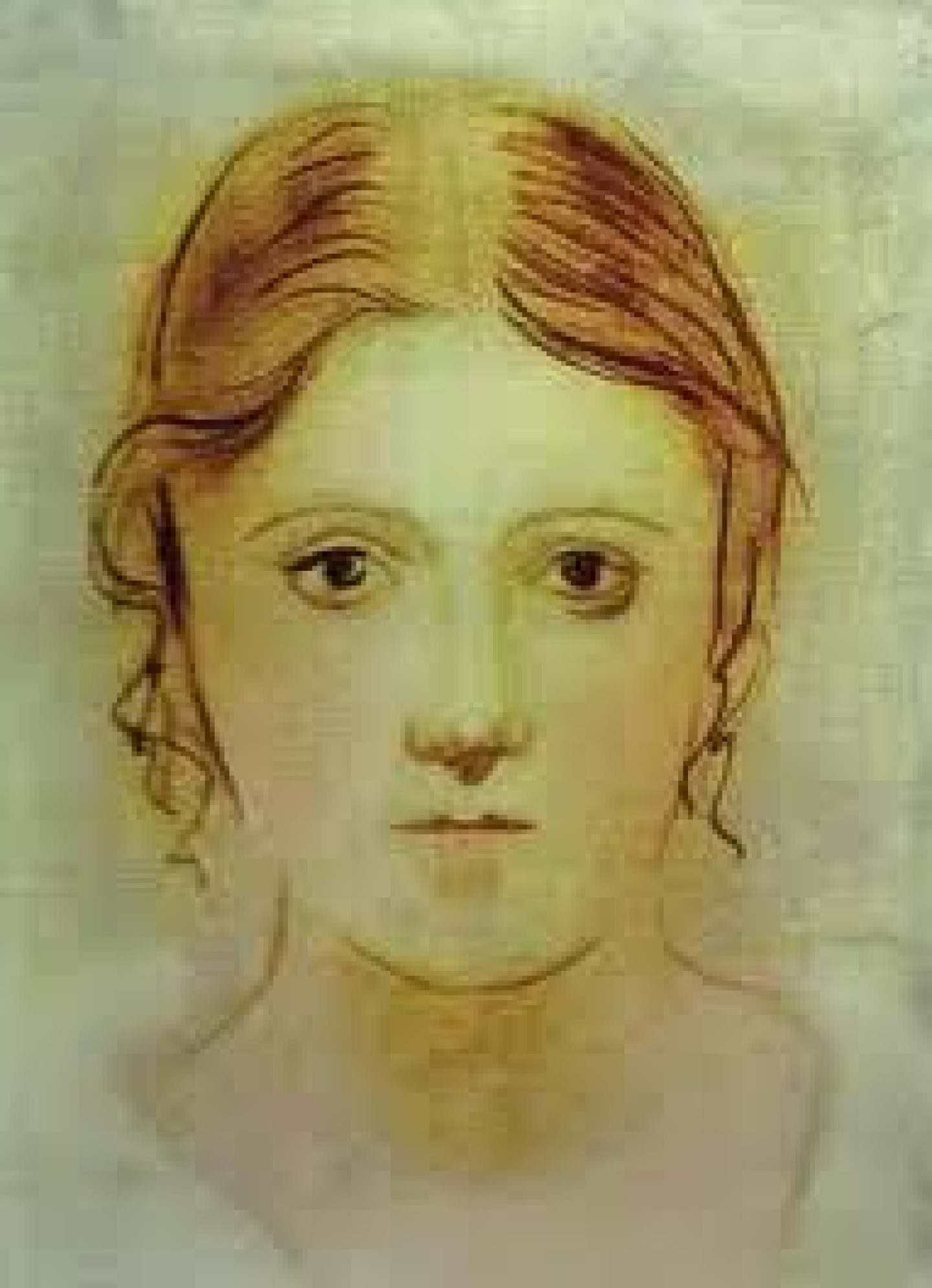

The true antichrist, will be thus.

He shall be born of science, and not by humanity. He shall be an amalgam of different seed, and made an abomination. His mother shall be a heifer, and his father an unholy seed, corrupted by the sword of angels. He shall have blue eyes by magic, but his true eyes are brown. He shall be beautiful to behold.

He shall minister through Prosperity, and teach to take the spoil. He shall take all the worst of mankind's philosophies, and make them prosper. He shall be emperor of a New Roman Empire, which shall emerge at the tribulation, and for seven years exist, as an Iron Jawed Monster, and this monster shall devour all other kingdoms on the Earth, and for one hour rule over everything.

He shall besiege Jerusalem, after the Third Temple is built. After making peace with the whole world, he shall betray Israel, and cause every nation on Earth to besiege Jerusalem. He shall have spies, many, who secretly find Christians, who will be hidden in the LORD's pinions, and if they sin, they shall be submitted to Antichrist's wiles, and if they see him, they shall be either raptured, or submitted to Captivity or Death.

At this time, diseases, plagues, darkness, blood, locusts, wild beasts and wars shall spread through the whole Earth, but the Sheep shall feed on the grasses, as a thousand fall on one side, and ten thousand on another, and they shall feed, and be at peace, and see none of the war of Armageddon. It shall be a secret to them, known only through their Spiritual senses. But they shall feed, and the hail shall fall on one place, and the war in another, and they shall not be harmed. The pestilence in the darkness shall not come near their tent.

He shall have signs and wonders. He shall cause fire to rain from heaven. He shall make a pact with the whole world, for peace, but then betray the world, by making war. He shall conquer through peace, and his warfare will be clandestine. Those who are caught in his warfare, shall be punished, but those who are not, shall be free and will not know. Until that day, when they are delivered.
Category: Ministry
Psalm 22
**22 **My God, my God, why hast thou forsaken me? why art thou so far from helping me, and from the words of my roaring?
This is what Jesus quoted on the cross, to indicate the reason He died.
**2 **O my God, I cry in the day time, but thou hearest not; and in the night season, and am not silent.
Jesus cried out for the repentance of the people, so He wouldn’t have to die. “Father, if it is your will, take this cup from me.” But the people sinned, and therefore put Him to death.
**3 **But thou art holy, O thou that inhabitest the praises of Israel.
He is Holy, and is the praise of Israel.
**4 **Our fathers trusted in thee: they trusted, and thou didst deliver them.
The people like Noah, and Abraham, and David trusted in God, and He did deliver them. So also, He’ll deliver Christ—through the resurrection.
**5 **They cried unto thee, and were delivered: they trusted in thee, and were not confounded.
They cried onto God, and He delivered them, because they trusted in Him, and were not confounded. How many of us are confounded when trouble comes? But Christ wasn’t confounded. Like Abraham was with Isaac, He knew God would provide the lamb, and would not suffer Christ to see decay.
**6 **But I am a worm, and no man; a reproach of men, and despised of the people.
He is low. He was impoverished, and lower than the prostitutes. The people saw nothing in Him to glorify, and saw He was nothing, so they mocked Him. Except the poor and destitute whom He healed.
**7 **All they that see me laugh me to scorn: they shoot out the lip, they shake the head, saying,
And the people mock Him on the cross,
**8 **He trusted on the Lord that he would deliver him: let him deliver him, seeing he delighted in him.
They said let God deliver Him—which they did, if you remember. They said that very thing to Jesus on the cross.
**9 **But thou art he that took me out of the womb: thou didst make me hope when I was upon my mother's breasts.
He was in His mother’s womb, and trusted on His mother’s breast, John the Baptist leapt for joy at Christ, when he was in his mother’s womb, because Jesus was the Christ.
**10 **I was cast upon thee from the womb: thou art my God from my mother's belly.
He was given to God from the womb. He was God’s servant even in the womb.
**11 **Be not far from me; for trouble is near; for there is none to help.
There was no one to help Him. They all fled the scene, when Christ was being crucified, and God would not help Him either. He was going to be put to death, for the sin of the world.
**12 **Many bulls have compassed me: strong bulls of Bashan have beset me round.
Many evildoers compassed Him, Pilate, Caiaphas, the priests, the Roman guards. God would not deliver Him, but rather gave Him over to death.
**13 **They gaped upon me with their mouths, as a ravening and a roaring lion.
They accused Him of wanting to supplant the temple, and burn it down. And they forged a lie against Him, that got Him in trouble. It was all false accusations, and these people lied about Him so much, and they had HIm crucified for nothing He did wrong. Just for a misinterpreted metaphor.
**14 **I am poured out like water, and all my bones are out of joint: my heart is like wax; it is melted in the midst of my bowels.
WHen He was on the Cross, his bones would have pulled out of joint, and when He was pierced, water poured out of His wound. His heart was troubled, and He was about to suffer a heart attack, which is consistent with John’s Gospel.
**15 **My strength is dried up like a potsherd; and my tongue cleaveth to my jaws; and thou hast brought me into the dust of death.
He was very afraid on that day, and sweat blood, and His tongue cleaved to His mouth, and He had no rest, as He was being put to death and shame for our sins.
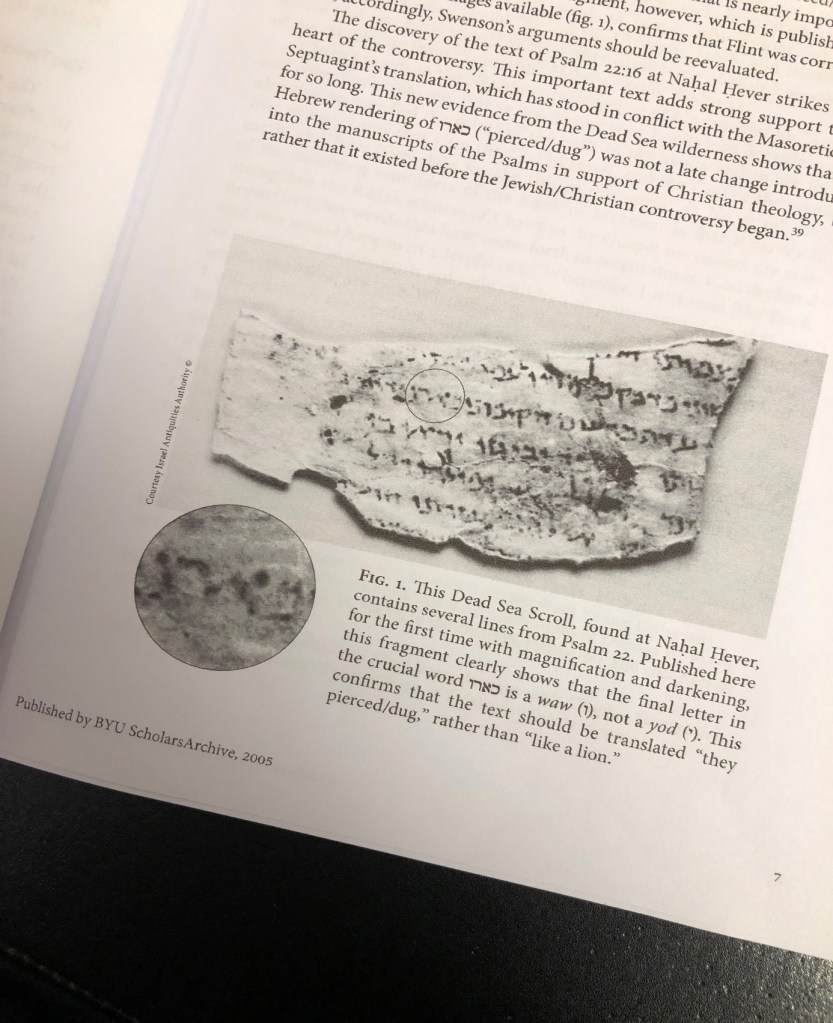
**16 **For dogs have compassed me: the assembly of the wicked have inclosed me: they pierced my hands and my feet.
Here, the assembly of Dogs put Him to death. It talks about His crucifixion, where He had His feet and hands pierced. And that is the word there.
**17 **I may tell all my bones: they look and stare upon me.
He didn’t lose a bone, despite being scourged—which could take out bones from the body—like the Lamb of God at the sacrifice, His bones were not broken.
**18 **They part my garments among them, and cast lots upon my vesture.
The centurions cast lots for His garments, as it says. They took His garments from Him, and cast lots over them, because they were greedy for His only possession. Really, the only possession Jesus had, which may have been made by His mother and was His most cherished possession. Like Joseph’s coat of many colors. Imagine losing your most prized possession, the thing you held dear, after being brutally tortured and put to death. And He did it for the World’s Sin.
**19 **But be not thou far from me, O Lord: O my strength, haste thee to help me.
He’s crying out to God to raise Him, and give Him victory over the Grave.
**20 **Deliver my soul from the sword; my darling from the power of the dog.
Do not let His soul be given to the Sword or the power of the dog. Don’t let Him be placed in Hell for eternity. Rather, He wants God to raise Him, and give Him victory over the Grave, and therefore, our Sins.
**21 **Save me from the lion's mouth: for thou hast heard me from the horns of the unicorns.
He has cried out to God like a Shofar. He has sounded his Harp, and cried out to God for His life to be redeemed from the grave. He has made His petition known, and has sounded His plea. He made known to God His petition
**22 **I will declare thy name unto my brethren: in the midst of the congregation will I praise thee.
And He made known His petition among the brethren, and in the congregation. He showed His faith, and spoke truth in the Synagogue every Saturday. He spoke truth and brought many to truth, and would not hide His confession, but spoke it boldly.
**23 **Ye that fear the Lord, praise him; all ye the seed of Jacob, glorify him; and fear him, all ye the seed of Israel.
Everyone who fears the LORD, should praise Him. Everyone who believes in the LORD should praise His name. Everyone who is the seed of God, which is Israel, whom are His elect servants upon the Earth, all the saved are Israel, and His blood born people too.
**24 **For he hath not despised nor abhorred the affliction of the afflicted; neither hath he hid his face from him; but when he cried unto him, he heard.
God did not despise the affliction and wrath Jesus bore. And God did not hide His face from Christ when Jesus cried out to Him.
**25 **My praise shall be of thee in the great congregation: I will pay my vows before them that fear him.
He paid His vows, which was His own blood for the mercy of us sinners. He didn’t sin, and was the Corban Sacrifice made, in Abraham’s Seed, for the redemption of all peoples and nations.
**26 **The meek shall eat and be satisfied: they shall praise the Lord that seek him: your heart shall live for ever.
The meek shall eat and be satisfied. They shall praise the LORD—in heaven, they’ll have eternity, and eat, and be filled—and their heart shall live forever. They will go to heaven, and live for eternity with good hearts, and strong resurrected Bodies.
**27 **All the ends of the world shall remember and turn unto the Lord: and all the kindreds of the nations shall worship before thee.
For all eternity, this Gospel will be claimed, and it will be preached in remembrance. It will be talked about, and the nations shall worship Christ, when He returns upon the clouds, and subdues them at Armageddon. Then, once they are subdued, Christ will be worshipped by all the nations of the Earth.
**28 **For the kingdom is the Lord's: and he is the governor among the nations.
The LORD’s is the kingdom, and Christ is the Governor of all the nations. He is most High, and the LORD’s Word come in the Flesh. He is the Alpha and Omega, the Beginning and the End, and all things shall be subjected to Christ Jesus at the end.
**29 **All they that be fat upon earth shall eat and worship: all they that go down to the dust shall bow before him: and none can keep alive his own soul.
The LORD shall make His servants fat and eat, and He shall trouble some, for none can keep alive their soul. Only Christ can keep alive our soul. Only Christ can perform our salvation, and accomplish our rest. We cannot save ourselves, we are completely at Jesus’ mercy.
**30 **A seed shall serve him; it shall be accounted to the Lord for a generation.
The Offspring of Zion shall serve God. The seed of Zion shall serve The Most High. His shall be accounted for a generation. When Christ returns the second time, He shall be born of the Daughter of Zion, and return upon the clouds of heaven, and Her seed shall rule as Christ. And we along with Him. And this seed shall serve the Lord God Jehovah-Jireh.
**31 **They shall come, and shall declare his righteousness unto a people that shall be born, that he hath done this.
And they shall declare the LORD’s righteousness to they who shall be born. That Jesus had done this great thing, and gave us victory over death.
The Common Sins
No drugs, alcohol, tattoos, gambling, pornography, prostitutes, one night stands, living without benefit of clergy, divorce, gossip, profanity or slander. Also, be grateful. That'd be my honest advice to a youth. Will they follow it? No. But, you do drugs, you get addicted. You drink, you get addicted. You get tattoos, you look and feel dirty. You gamble, you go into debt. You watch pornography, you become a creep. You have one night stands, you get children out of wedlock. You live without the benefit of the clergy, you also get children out of wedlock. You divorce, your children live in broken homes and begin to be bitter. You gossip, you hurt other people. You use profanity, it reinforces anger. You slander, you damage someone's reputation. If you're not grateful, you squander the present moment.
Response to Promise Backlund’s 5 Weird Things about the Faith
1. Well, the source of joy, love and peace is God. It's not a domination ritual, it's just an acknowledgment to God's wisdom, that we will pattern our life according to what He said. Because ultimately that makes everyone better off. I never understood worship either. But, sometimes, sitting in silence, or being still, and knowing God is there, or singing a song to Him when no one is watching, it just connects you to something bigger. And Bluegrass Hymns are so beautiful. That's my kind of worship. It's so real. Bethel, Hillsong and Elevation are really strange to my ears, and bring a sort of unease.

2 & 3. Well, Baptism is kind of weird. So is communion. But, those are the only two sacraments God has given us, and that to be an outward sign of our faith. Yes, I understand that. Baptism is the New Bris. Or New Circumcision. That was something I had to understand reading Jeremiah, so any form of it, is legitimate, so long as it's in faith. Communions is a replacement for the animal sacrifice. They poured the blood of the animal into the ground, and ate the flesh. That was meant to be a sign of your sin going into the animal. But, that wasn't enough to save, so now that sacrifice is Christ Jesus. Because a sin that brought death on someone, couldn't be forgiven by the animal sacrifice. So we eat His flesh and drink His blood, like they did with the Animal Sacrifice.

4. I don't like the tone many Evangelicals take during prayer. It sounds very fake. But, prayer is powerful. It can change the entire world. I've seen it many times, which is why offering prayers to God can be helpful, but also dangerous. I've been slowly understanding that the Lord's Prayer is an example of how to pray for a reason, is that God is totally that powerful. And so, you should probably pray prayers of mercy, thanks and forgiveness. And also intercede for others, praying more for their souls, than your own. Well, don't forget Moses interceded for Israel. God will listen, and gives us a portion of judgment, and power. Which He intends for us to use it for other's mercy, and not judgment.

5. Well, the Aleph and the Tav are symbols of the Ox and Cross, it goes back to Proto Hebrew. Christ is the Sacrificial Ox, and the Cross is the Covenant or Mark of Salvation. You can see it on my thumbnail. So, God foreknew Jesus would die on a cross, and even put it in the stars as a sign. You can see the Summer Triangle, the triangle is an A, and the constellation Cygnus is the cross. So the Cross is a symbol set for us, from the beginning.
Constantine and American Perseuction
My personal experience with [the reason Evangelicals don't like Constantine], isn't due to the Da Vinci Code, but a long string of Protestants, who thought the Catholic Church was Antichrist. You see that in Anabaptist writings all the time from 1500 onward. Foxe's Book of Martyrs doesn't just have Protestant Martyrs, but dialogues about the Catholic atrocities in the Americas, India and Africa. That just comes with the territory of Protestants. Just like Catholics think Protestants have no true authority to teach, or give communion. It's just bad blood.

But there really is persecution of Christians. In Foxe's book of Martyrs he talks about economic persecutions, too, which Christians are increasingly becoming the victim of. Mail Fraud, objectors within Government not doing their paperwork, investigations by Police, gaslighting from neighbors, HR departments not hiring due to online content or reputation. It's becoming real, friend. Try not to blame Christians for the very real suffering they're experiencing, and don't gaslight them, saying it's not happening. Some people need those followers, too, to have food on their table. In this economy, that's practically a large portion of people's livelihoods, something like 4,000,000.

That's also how the church was persecuted in Thyatira, not with torture, death or imprisonment, but they denied them access to the public economy. Because they wouldn't tolerate the Woman Jezebel.
On Faith and Math
[There's enough evidence for the Bible to know it's true.] You know, in Calculus, you have enough information to find the answer. If you needed all of it, you'd just keep adding up the sums forever. Sometimes, you have to see the pattern, and [divide] to the right answer.

{}Numbers are not abstractions. They're measurements. And the reason Calculus works, is that the measurements in an infinite series, increase, and it gets calculated out to infinity in what's called a limit. But, you only need one or two ratios to get to the answer, not the entire infinite sum.

Same thing with this, I don't need all the evidence to know the Bible's true. Only enough to complete the pattern.

To get a good idea of it, look at [an infinite sum.] It's just seeing the pattern, you can jump the the conclusion, without all of [the ratios] being used.

And calculus basically takes that same idea, and uses it with trigonometry and formulas which are comprised of different curves through what's called a derivative, to basically do the same thing, and calculate a curve, or the area underneath it.

But generally, a lot of things in life have to be a leap of faith. You can't scratch at all the data, you have to make an assumption, even though it is 100% true.

[Two] looks like a lot of things. {}

I mean, I'm not going to go over number theory{} [it] should have [been] learned {} in third grade. {}[D]oes the word "Dandelion" exist? You know? Or "Atom"[?] That's just semantics. And really a rabbit hole for navel gazers. The fact is, there's a thing, we talk about it, and that's how most things work in the real world.

{}I'm making an analogy between calculus and evidence for the Bible. [It's] asked [of] me, "Do you know all the evidence for the Bible?" I sa[y], "No, but you don't have to, because like in calculus, you can make a leap to the conclusion, with limited information." Then [it's] retorted, "Math is an abstraction." [Then I say] it's not. And then [it's] said, "Show me two."

You see, [this is] mining down to the very basics of ontology. [It's] asking a question irrelevant to the point, of what is a number, when I simply said, you can reason to higher things, with limited knowledge. So, likewise, with numbers, we know what they are. And in calculus, there's a number that a curve relates to. And we calculate that number with limited information. And that curve measures things, and the area underneath it can be used to understand things. Imagine that.

So, the archeology I've found, though not all of it, likewise, shows a pattern of the Bible being true. Like, in calculus, there's a pattern with limited information that shows you the exact measurement of the curve or the area underneath it.


Okay, you need me to explain number theory. That's alright.

So, numbers are a ratio. They relate to things that way, and can be described in geometric figures. And in geometric figures, what is similar, can be augmented or diminished, to create similar number. This works in sets--like two apples---or in side lengths--like in a square side length of two, or area of two, which will have side lengths of square root of two---or in physical energy and waves, like in quanta or heat distribution, it will relate through rate of change, which draws back to the calculus I was talking about. So, that's what number is. Not an abstraction, but a measurement of a countable object.

In logic, numbers follow certain systems, through operations like division, multiplication, square roots, exponents, subtraction and addition. And these can be built on one another, through a variety of ways, to build logic which can describe physical space and time. And the number relates to the ontology of the objects we measure, and the operations on the epistemological conclusions, which can be used to draw comparisons between similar objects and reach new conclusions. Due to equalities.

What I'm doing, is making an analogy between Calculus and the Evidence of the Bible. You said, "Do you have all the evidence." Well, I took an analogy of Calculus, and the logic used in Calculus, which is a prediction of a pattern, to get us to a number that relates to a curve. And I related it to the Bible, by saying I've seen enough evidence for the Bible, to conclude that it's true. Therefore, God exists. In evidence of archeology, philosophy, and textually.


A thing is either true or false. Logic moves from one truth, to an unknown truth.

I start with the evidence I've seen of the Bible being true, and moved to conclude that the Bible was true, therefore it was a witness of God. Since the evidence was true, it must follow that God is too.

You argue semantics too much. Whether a ratio is an abstraction or not, it does nothing for the analogy I made, which you ignored completely.

You asked me, "Do you have all the evidence?" I said, like in calculus, you can have limited information, and reach the right conclusion. Which you said, "Prove to me the number two." And then said, "Number is an abstraction." Number is not an abstraction. Even in ratios, there's a certain law which the numbers follow, which is described by the ratio. That law, is the foundation of reason. Not the numbers, but what the numbers represent. Likewise, the Bible has true evidence, corroborating it as a chain of witnesses, which is why I believe in it.

[So t]he number two is true, where the equality makes it true. So, to answer your question, you need a context for it to be either true or false. And that's how logic works. And that is not an abstraction.

©2026 B. K. Neifert
All Rights Reserved
My Doubt
I do believe in God. Rather, I know there's a God. My doubt is that He's good. My other doubt is that He will save me.

My  first doubt, that He is good: I love the Bible. I just don't know if the Bible is simply this joke God pulled on human beings, and was like, "Here's the rules, so now I'm going to crush you if you try to follow them." As that's the main point Christians seem to bring up, is that we're saved by "Grace" which ultimately throws away any responsibility. The Law is beautiful--if you understand it fully, and especially if you look closely at Paul's Epistles, it's a beautiful concept. That we're ultimately condemned to die under the perfection of the Law, but God chose to give us mercy. For what reason? Here is where Christians seem to fracture, most think that's all we need, is the gift of God's grace, and there's nothing more to it. Meanwhile, someone who truly desires to be righteous and loves the Law gets crushed by design under the Christian's teachings, who seem to blame suffering on the one who bears it---which is entirely contrary to both Old and New Testament teaching. So, I do not know if Christians have the word of God, and the Bible is false. Or if the Bible is true, and Christians are rather engaged in some worldly religion, about making oneself rich and ignoring the weightier matters of the Law, such as Mercy, Justice and Faithfulness.

My doubt that He will save me. I've made oaths, I've thought impure thoughts, I've almost become shipwrecked, and it's not for lack of wanting the faith, or trying. And I truly desire the fruits of righteousness, and the fruits of truth, but it seemed by manner of consequence, I could never find a true church that taught the full balance of the Gospel, and they all steered me away from what I truly needed. And listening to sermons, they seem to be accusatory of my condition, calling me out for the fact that I am suffering. I do, however, get great comfort in the Bible---as it seems to scream back at the Christians all the time, "The poor and sufferer and needy are who you must uplift! Sorrow is to be expected." But,  then the Christians scream back, "He's poor, and meek, and humiliated! Why ought we listen?" So, I don't know if I'm saved on that account, that nobody cared about my soul enough to show me the love of God and also discipline me. It was either too much love, or too much discipline. Which, I say that God's love and discipline are my reason for believing in Him...  but at the moment I feel hurt and pain and depression, because the entirety of Christianity seems to run aground, and there's no true preacher within 50 miles. So, I have the radio instead, and it seems they affirm the same message that to be saved, is to prosper in this life. And I feel unsaved because I have none of the things of this world, but rather shame, and confusion, and sorrow. But, then I read the Psalms and Prophets. Those do not shame me. And again I wonder, if God told a joke, and I was just not in on it.
Seventh Day Adventists
Yeah, that's a cult. No doubt. Good work Matt. I had no idea. Let's put it this way, there's Poets and there's Posers. People who make "Prophecies" expecting them to come true, are just people trying to gain a following.

The Hebrew word for Prophet is "Interpreter." I learned that from Baruch Spinoza of all people. But, generally, I think creatively reflecting on scripture, is different than trying to exert your own beliefs as if they were. Which, Ellen G. White crossed that line. Nothing I write is sacred... it's just sermons in the form of Poetry. If it all got burned tomorrow, it'd be a waste for me, as it wouldn't save souls. But, there'd be no loss to the kingdom. That I know of. I always say, if any scripture actually gets written, it will appear there in scripture, and nobody will have to do anything to it. God will do it.
The Abolishment of Diet, Sabbath and New Moon Colossians 2:20-23
20 Wherefore if ye be dead with Christ from the rudiments of the world, why, as though living in the world, are ye subject to ordinances,

21 (Touch not; taste not; handle not;

22 Which all are to perish with the using;) after the commandments and doctrines of men?

23 Which things have indeed a shew of wisdom in will worship, and humility, and neglecting of the body: not in any honour to the satisfying of the flesh.

